Thriving With ADHD Newsletter

Thriving With ADHD Newsletter
Updated March 2026 to include additional guidance and resources for parents raising ADHD youth and teens.
●
Why do ADHD children and teens struggle with everyday routines, schoolwork, and emotional regulation?
Children and teens with ADHD often experience challenges with executive function, which affects the brain’s ability to plan, organize, start tasks, manage time, and regulate emotions. These difficulties can make everyday situations—such as homework, morning routines, friendships, and school expectations—feel overwhelming. With the right guidance and practical strategies, however, ADHD youth and teens can learn skills that help them succeed at home, at school, and in relationships. These are the kinds of challenges I address in my work with ADHD families and educators.
●
Supporting ADHD youth and teens is a journey for families as well as educators. Many parents appreciate having practical tools they can return to when challenges arise at home or at school. If you would like more structured guidance on routines, emotional regulation, study skills, and nutrition for ADHD brains, you can explore my ADHD resource books for families.
Thriving With ADHD™ – An Introduction: A Parent’s Guide
StudySmart™ – Test Taking and Study Skills for ADHD Youth and Teens
FuelRight™ – Nutrition and Brain Support for ADHD Youth and Teens
ImpulseMastery™ – Emotional Regulation and Self-Control for ADHD Youth and Teens
OrganizeMe™ – Structure and Time Skills for ADHD Families
You can explore these resources here:
https://payhip.com/ThrivingWithADHD
Dr. Anders Osborne, Ph.D.
ADHD Specialist & Educator | ADHD Adult | Parent & Grandparent
Founder, I Teach To Reach ADHD Coaching LLC & Thriving With ADHD™
Substack: https://dranders.substack.com
Assembling the pieces between the non-divergent world and the brilliance of being ADHD.
Why ADHD Kids Resist Routines — And What Dads Can Do Instead of Arguing Every Morning
Many dads tell me the same story.
Mornings begin calmly enough. Then something small happens. A child cannot find their shoes. A backpack is missing homework. Breakfast takes longer than expected. Suddenly the entire house is tense. Voices rise. Everyone feels rushed. And before the day has even started, it already feels like a battle.
For fathers raising ADHD youth and teens, routines can feel especially frustrating. Many dads grew up believing that routines should simply be followed. When the same steps repeat every day, it seems logical that children should eventually learn the pattern and do it automatically. But ADHD brains do not always operate that way.
Why do ADHD kids resist routines?
Children with ADHD often resist routines not because they are defiant, but because executive function challenges make it difficult for the brain to organize and initiate multi-step tasks. When routines require several steps—remembering materials, managing time, and starting tasks independently—the ADHD brain can quickly become overwhelmed. As a result, routines that appear simple to adults may feel confusing or frustrating to ADHD youth and teens.
Over the years, fathers in my workshops have described feeling confused by this. They say things like, “We have done this same routine for months. Why is it still so hard?” The answer lies in how ADHD affects the brain’s ability to automate behaviors. Repetition alone does not always create automatic habits when executive function is involved.
Another common pattern appears during conflict. When routines break down, many dads naturally respond by trying to tighten control. They may raise their voice, give more instructions, or repeat the same directive multiple times. The intention is understandable. Fathers want to help their children succeed and learn responsibility. However, increased pressure often creates the opposite effect. The ADHD child’s brain can become overloaded, making it even harder to complete the routine.
A different approach works better. Instead of enforcing routines through repeated correction, ADHD families benefit from practicing routines together.
Practicing routines means treating daily tasks the same way we treat learning a sport or a new skill. Instead of expecting immediate perfection, the routine becomes something the family rehearses calmly during non-stressful moments. For example, a dad might walk through the morning routine with his child the evening before. Together they look at the backpack, shoes, and clothing needed for the next day. The steps are practiced slowly, without pressure or time limits.
When routines are practiced rather than demanded, the brain has a chance to build stronger connections between the steps. Children begin to understand the sequence rather than simply reacting to commands.
Dads often discover something surprising when they try this approach. The arguments begin to decrease. Children feel less defensive because the routine is no longer framed as a correction. Instead, it becomes a shared skill the family is learning together.
Another helpful strategy is to simplify the routine itself. ADHD children and teens manage tasks more successfully when steps are clearly visible. Some families use a short checklist posted near the door. Others keep backpacks, shoes, and jackets in the same location every day. These visual and environmental cues reduce the mental load required to remember each step.
The goal is not to create a perfect system overnight. ADHD families thrive when routines are treated as something that evolves gradually. Each small improvement reduces stress for both parents and children.
Supporting ADHD youth and teens is a journey for families as well as educators. Many parents appreciate having practical tools they can return to when routines begin to break down again. For fathers who would like more structured guidance on building routines without daily conflict, I explore these strategies in greater detail in my guide:
OrganizeMe™: Practicing Routines Without Battles — A Calm, Practical Guide for Dads Raising ADHD Youth & Teens
You can explore the guide here:
https://payhip.com/ThrivingWithADHD
Dr. Anders Osborne, Ph.D.
ADHD Specialist & Educator | ADHD Adult | Parent & Grandparent
Founder, I Teach To Reach ADHD Coaching LLC & Thriving With ADHD™
Substack: https://dranders.substack.com
Assembling the pieces between the non-divergent world and the brilliance of being ADHD
Dr Anders Osborne PhD
Thriving With ADHD
OrganizeMe Practicing Routines Without Battles
ADHD routines for kids
ADHD morning routines
ADHD parenting strategies
ADHD executive function routines
ADHD dads parenting
ADHD family routines
ADHD youth organization skills
ADHD teen routines
executive function parenting
Thriving With ADHD™ — Today Was Fun. Tomorrow Is Getting Real. ADHD Families on Snow Day Two
Thriving With ADHD™ — Snow Day 3: Why ADHD Kids Suddenly Melt Down After Multiple Snow Days (And What Parents Should Do Today)
Updated March 2026 to include additional guidance and resources for parents raising ADHD youth and teens.
●
Why do ADHD children and teens struggle with everyday routines, schoolwork, and emotional regulation?
Children and teens with ADHD often experience challenges with executive function, which affects the brain’s ability to plan, organize, start tasks, manage time, and regulate emotions. These difficulties can make everyday situations—such as homework, morning routines, friendships, and school expectations—feel overwhelming. With the right guidance and practical strategies, however, ADHD youth and teens can learn skills that help them succeed at home, at school, and in relationships. These are the kinds of challenges I address in my work with ADHD families and educators.
●
Supporting ADHD youth and teens is a journey for families as well as educators. Many parents appreciate having practical tools they can return to when challenges arise at home or at school. If you would like more structured guidance on routines, emotional regulation, study skills, and nutrition for ADHD brains, you can explore my ADHD resource books for families.
Thriving With ADHD™ – An Introduction: A Parent’s Guide
StudySmart™ – Test Taking and Study Skills for ADHD Youth and Teens
FuelRight™ – Nutrition and Brain Support for ADHD Youth and Teens
ImpulseMastery™ – Emotional Regulation and Self-Control for ADHD Youth and Teens
OrganizeMe™ – Structure and Time Skills for ADHD Families
You can explore these resources here:
https://payhip.com/ThrivingWithADHD
Dr. Anders Osborne, Ph.D.
ADHD Specialist & Educator | ADHD Adult | Parent & Grandparent
Founder, I Teach To Reach ADHD Coaching LLC & Thriving With ADHD™
Substack: https://dranders.substack.com
Assembling the pieces between the non-divergent world and the brilliance of being ADHD.
~~~
Snow Day 3 is often the hardest day for ADHD families.
If emotions feel bigger, motivation feels lower, and everyone seems tired — there is a reason.
Today’s article explains what is happening inside ADHD homes after multiple snow days and offers calm, practical strategies parents can use right now.
Dr.Anders Osborne,Ph.D.
ADHD Parent • Grandparent • Educator
Founder, Thriving With ADHD™
Assembling the pieces between the non-divergent world and the brilliance of being ADHD.
Dr.Anders Osborne PhD
Dr Anders Osborne ADHD Specialist
Thriving With ADHD™
Thriving With ADHD snow day strategies
ADHD parenting snow days
ADHD families at home
ADHD youth and teens routines
ADHD executive function support at home
ADHD parenting during school closures
ADHD nervous system regulation parents
ADHD behavior during routine changes
ADHD home structure strategies
Dr.Anders Osborne,Ph.D. ADHD Specialist & Educator | ADHD Parent • Grandparent • Educator | Founder, Thriving With ADHD™
Updated March 2026 to include additional guidance and resources for parents raising ADHD youth and teens.
●
Why do ADHD children and teens struggle with everyday routines, schoolwork, and emotional regulation?
Children and teens with ADHD often experience challenges with executive function, which affects the brain’s ability to plan, organize, start tasks, manage time, and regulate emotions. These difficulties can make everyday situations—such as homework, morning routines, friendships, and school expectations—feel overwhelming. With the right guidance and practical strategies, however, ADHD youth and teens can learn skills that help them succeed at home, at school, and in relationships. These are the kinds of challenges I address in my work with ADHD families and educators.
●
Supporting ADHD youth and teens is a journey for families as well as educators. Many parents appreciate having practical tools they can return to when challenges arise at home or at school. If you would like more structured guidance on routines, emotional regulation, study skills, and nutrition for ADHD brains, you can explore my ADHD resource books for families.
Thriving With ADHD™ – An Introduction: A Parent’s Guide
StudySmart™ – Test Taking and Study Skills for ADHD Youth and Teens
FuelRight™ – Nutrition and Brain Support for ADHD Youth and Teens
ImpulseMastery™ – Emotional Regulation and Self-Control for ADHD Youth and Teens
OrganizeMe™ – Structure and Time Skills for ADHD Families
You can explore these resources here:
https://payhip.com/ThrivingWithADHD
Dr. Anders Osborne, Ph.D.
ADHD Specialist & Educator | ADHD Adult | Parent & Grandparent
Founder, I Teach To Reach ADHD Coaching LLC & Thriving With ADHD™
Substack: https://dranders.substack.com
Assembling the pieces between the non-divergent world and the brilliance of being ADHD.
~~~~~
Snow Day Two: Picking Up Where We Left Off
Thanks for reading Thriving With ADHD Newsletter! Subscribe for free to receive new posts and support my work.
Today, many ADHD families woke up to excitement. Snow falling. Schools closing. Children cheering at the unexpected gift of being home. The first snow day often feels magical — routines pause, alarms disappear, and families lean into comfort and novelty. In yesterday’s article, we talked about surviving that first day together and protecting calm inside the home.
But tomorrow may feel different.
The snow is still here. The roads may still be closed. Everyone is still home.
And parents wake up realizing this is no longer a surprise day off — this is real life continuing indoors.
Some parents feel anxious this morning. Others feel grateful for another day with their children. Many feel both at the same time. Snow Day Two is where ADHD families begin to find their rhythm.
The emotional tone simply shifting from one day into another.
Two Kinds of Snow Day Parents — And Both Are Right
Some parents wake up worried about one more long day indoors. They wonder how to keep peace, manage noise, and prevent sibling tension. Other parents hear the forecast and feel excitement. I was one of those parents. When snow was coming, I went to the store early, stocked up on food, bought hot chocolate for what felt like half the neighborhood, and prepared the house knowing children would gather.
Our home became the place kids came to warm up. Coats and gloves had a place by the garage door. The garage itself became a transition space where kids could move, laugh, and reset before coming inside. Hot chocolate waited at the kitchen table. Children moved between outdoor play, conversation, and video games without constant correction because the environment already supported them.
Some homes grow quieter during snow days.
Other homes grow louder and fuller.
Both can be healthy ADHD homes.
The goal is not silence or perfection. The goal is intentional environment.
Parents may even include themselves in the plan: tomorrow morning the television stays at a preset volume until coffee is in hand. Children understand expectations when they are clear and calm.
You are not controlling the day.
You are guiding it.
Teaching Young Children Through Everyday Moments
Snow Day Two offers quiet teachable moments disguised as survival strategies. Young children can learn independence naturally during these days. Move sandwich ingredients to a reachable shelf. Show them how to assemble lunch, pour drinks, and clean up afterward. These are not chores; they are life skills that reduce boredom and build confidence.
Without structure, children often graze all day simply because they are seeking stimulation. Establishing gentle eating windows helps regulate energy and mood while preventing constant kitchen interruptions. Children feel capable, and parents gain breathing room.
Plan Tomorrow Tonight
Snow Day Two works best when parents gently outline expectations ahead of time. After dinner or before bedtime, talk briefly with children about what tomorrow will look like. This reduces uncertainty, which ADHD brains often experience as stress.
Explain when the morning begins, when food happens, and when shared family time will occur. Let children know there will be together time and independent time. Predictability removes power struggles before they start.
Parents may even include themselves in the plan: tomorrow morning the television stays at a preset volume until coffee is in hand. Children understand expectations when they are clear and calm.
You are not controlling the day.
You are guiding it.
Teaching Young Children Through Everyday Moments
Snow Day Two offers quiet teachable moments disguised as survival strategies. Young children can learn independence naturally during these days. Move sandwich ingredients to a reachable shelf. Show them how to assemble lunch, pour drinks, and clean up afterward. These are not chores; they are life skills that reduce boredom and build confidence.
Without structure, children often graze all day simply because they are seeking stimulation. Establishing gentle eating windows helps regulate energy and mood while preventing constant kitchen interruptions. Children feel capable, and parents gain breathing room.
Understanding Teens on Day Two
Teenagers often respond to extended snow days by retreating into their rooms. Parents sometimes interpret this as withdrawal or disinterest. In reality, many teens are regulating stimulation after an exciting first day. Their nervous systems seek quiet control.
Rather than insisting on togetherness, invite it gently. Suggest a shared lunch window between 11:30 and 12:30. After lunch, propose a family movie chosen collaboratively — each person selects three options online, names go into a bowl, and one is drawn randomly. The shared activity has a clear beginning and end, which protects both connection and independence.
When together time has boundaries, teens participate more willingly and parents avoid hurt feelings when invitations are declined.
For the Parent Who Loves Snow Days
Some parents genuinely love having children home. These parents open their homes, welcome friends, and enjoy the lively energy snow days bring. ADHD children often thrive in these environments because movement, social interaction, and shared experiences naturally regulate behavior.
If your home becomes the gathering place, preparation prevents overwhelm. Designate clear areas for coats, boots, and wet clothing. Consider garages, entryways, or bins that separate belongings. Create warming stations with drinks or snacks so transitions indoors remain smooth.
You are not managing chaos.
You are hosting regulation.
Managing Friends, Noise, and Small Spaces
Whether living in a house or a city apartment, shared space requires agreements rather than constant correction. Set a household television volume that protects everyone’s nervous system. Explain noise expectations so children understand they are sharing limited space.
In apartments where outdoor play may be limited, creativity replaces space. Hallway scavenger hunts, hide-and-seek variations, card games, or shared movie time create connection without overwhelming neighbors or parents. Clear expectations allow energy without conflict.
Safety During a Real Blizzard
Not every storm allows carefree outdoor play. Gale-force winds and dangerously low temperatures change the rules. Children should always inform parents before going outside or visiting friends. Time limits, proper clothing, and check-ins become safety measures rather than restrictions.
Children cooperate more easily when they understand safety is the priority.
Protecting the Parent’s Morning
Parents also deserve gentleness on Snow Day Two. Sleeping in slightly, drinking coffee quietly, or easing into the day supports emotional regulation for everyone. Presetting television volume or morning expectations allows children independence while adults reset emotionally.
Calm parents create calmer homes.
Creating Togetherness Without Pressure
Snow Day Two works best when families balance closeness and independence. Shared meals, a movie, a board game, or even a brief walk together create connection. Afterward, everyone returns to personal space without guilt or resistance.
Togetherness does not need to last all day to matter.
Often, one intentional shared moment is enough.
The Deeper Truth About Snow Day Two
Today was about excitement.
Tomorrow is about rhythm.
ADHD families thrive when expectations soften and environments support natural regulation. Snow days reveal something powerful: connection grows not from control but from thoughtful preparation and emotional flexibility.
You are not trying to entertain children every minute.
You are creating a home where everyone can exist comfortably together.
Safety During a Real Blizzard
Not every storm allows carefree outdoor play. Gale-force winds and dangerously low temperatures change the rules. Children should always inform parents before going outside or visiting friends. Time limits, proper clothing, and check-ins become safety measures rather than restrictions.
Children cooperate more easily when they understand safety is the priority.
Protecting the Parent’s Morning
Parents also deserve gentleness on Snow Day Two. Sleeping in slightly, drinking coffee quietly, or easing into the day supports emotional regulation for everyone. Presetting television volume or morning expectations allows children independence while adults reset emotionally.
Calm parents create calmer homes.
Creating Togetherness Without Pressure
Snow Day Two works best when families balance closeness and independence. Shared meals, a movie, a board game, or even a brief walk together create connection. Afterward, everyone returns to personal space without guilt or resistance.
Togetherness does not need to last all day to matter.
Often, one intentional shared moment is enough.
The Deeper Truth About Snow Day Two
Today was about excitement.
Tomorrow is about rhythm.
ADHD families thrive when expectations soften and environments support natural regulation. Snow days reveal something powerful: connection grows not from control but from thoughtful preparation and emotional flexibility.
You are not trying to entertain children every minute.
You are creating a home where everyone can exist comfortably together.
A Gentle Closing Thought
Snow days pass quickly. Years later, children remember warm kitchens, shared laughter, neighborhood gatherings, and parents who made space for both play and rest. Whether your home feels quiet or full today, whether you feel energized or tired, know that both experiences belong to real family life.
Today was fun.
Tomorrow is getting real. Another day where everyone is home.
And both days matter.
Dr.Anders Osborne,Ph.D.
ADHD Parent • Grandparent • Educator
Founder, Thriving With ADHD™
Assembling the pieces between the non-divergent world and the brilliance of being ADHD.
Dr.Anders Osborne PhD
Dr Anders Osborne ADHD Specialist
Thriving With ADHD™
Thriving With ADHD snow day strategies
ADHD parenting snow days
ADHD families at home
ADHD youth and teens routines
ADHD executive function support at home
ADHD parenting during school closures
ADHD nervous system regulation parents
ADHD behavior during routine changes
ADHD home structure strategies
ConnectWell™ social skills ADHD
OrganizeMe™ executive function ADHD
ImpulseMastery™ impulse control ADHD
FuelRight™ ADHD nutrition support
StudySmart™ ADHD study skills
Thriving With ADHD™ — Rainy Days, Blizzard Nights, and the ADHD Family: Staying Calm, Connected, and Sane When Everyone Is Home
Updated March 2026 to include additional guidance and resources for parents raising ADHD youth and teens.
●
Why do ADHD children and teens struggle with everyday routines, schoolwork, and emotional regulation?
Children and teens with ADHD often experience challenges with executive function, which affects the brain’s ability to plan, organize, start tasks, manage time, and regulate emotions. These difficulties can make everyday situations—such as homework, morning routines, friendships, and school expectations—feel overwhelming. With the right guidance and practical strategies, however, ADHD youth and teens can learn skills that help them succeed at home, at school, and in relationships. These are the kinds of challenges I address in my work with ADHD families and educators.
●
Supporting ADHD youth and teens is a journey for families as well as educators. Many parents appreciate having practical tools they can return to when challenges arise at home or at school. If you would like more structured guidance on routines, emotional regulation, study skills, and nutrition for ADHD brains, you can explore my ADHD resource books for families.
Thriving With ADHD™ – An Introduction: A Parent’s Guide
StudySmart™ – Test Taking and Study Skills for ADHD Youth and Teens
FuelRight™ – Nutrition and Brain Support for ADHD Youth and Teens
ImpulseMastery™ – Emotional Regulation and Self-Control for ADHD Youth and Teens
OrganizeMe™ – Structure and Time Skills for ADHD Families
You can explore these resources here:
https://payhip.com/ThrivingWithADHD
Dr. Anders Osborne, Ph.D.
ADHD Specialist & Educator | ADHD Adult | Parent & Grandparent
Founder, I Teach To Reach ADHD Coaching LLC & Thriving With ADHD™
Substack: https://dranders.substack.com
~~~~~
Assembling the pieces between the non-divergent world and the brilliance of being ADHD.
A blizzard changes more than weather; it changes emotional regulation inside a home. Schools close, routines disappear, and suddenly families accustomed to movement and structure are living together continuously. For ADHD families, this shift feels particularly intense because what disappears is not simply school — it is regulation. Teachers, schedules, peer interaction, and movement quietly support ADHD children every day. When those structures vanish, the home absorbs the pressure.
Parents rarely say it aloud, yet three fears rise quickly. Many worry they are losing control of the household. Others quietly fear their child is falling behind while other families appear calm and productive. And perhaps most tenderly, parents fear they will lose patience and damage connection with the child they love deeply.
Snow days do not reveal bad parenting.
They reveal how much invisible structure normally helps ADHD families succeed.
You are not failing today.
You are adjusting.
The ADHD Parent Nervous System Comes First
Most parents begin snow days thinking about their children's behavior. Experienced ADHD families eventually learn something different: regulation begins with the adult. When parents feel overwhelmed, the entire emotional climate of the home shifts. Children sense tension immediately and respond with restlessness or resistance.
Parents often ask how to stay calm when everyone is home or how to avoid yelling as the day grows long. The answer begins with permission. You are allowed to enjoy the snow day too. You may read, rest, watch a favorite show, or sit quietly with coffee while snow falls outside. Resting is not neglect; it is regulation leadership.
Children calm faster when adults appear emotionally settled.
Snow days are not performance days.
They are nervous-system preservation days.
The Parent Sets the Day
ADHD homes thrive when expectations are spoken aloud. Instead of recreating school schedules, gather the family and gently define the tone of the day. Explain that today will be slower, softer, and shared. Declare simple anchors rather than rigid plans. Perhaps today becomes a hot-dog or sandwich day, with lunch available between 11:30 and 1:00 so children can finish activities before eating.
Show youth and teens where food, plates, snacks, and drinks are located. Independence reduces interruptions and builds confidence. Then model boundaries by announcing your own plans: you might read in one room or watch a favorite movie later. Let children know they may come find you anytime and that you will check on them as well.
Structure does not need to be strict to be effective.
It only needs to be clear.
Screen Time During Blizzard Days: The Question Every Parent Asks
Every winter parents wrestle with screen time decisions. They wonder whether relaxing rules will worsen ADHD symptoms or undo progress made during school weeks. Research shows excessive, unstructured screen use can affect mood and sleep, yet snow days exist outside normal routines. Attempting rigid limits often creates conflict instead of regulation.
Electronics may be used intentionally — not endlessly.
Consider creating a simple snow-day screen agreement. Explain that screens are available during certain hours so everyone in the home can relax, including parents. After that period, the household resets into movement, conversation, or a new activity. Predictability protects dopamine balance better than constant negotiation.
You are not ruining regulation.
You are pacing energy.
If You Only Remember One Thing From This Article, Let It Be This…
ADHD children do not struggle during snow days because they are difficult.
They struggled because the structure disappeared overnight.
When adults calmly replace lost structure with warmth, clarity, and flexibility, regulation returns naturally.
You do not need to control the day.
You only need to guide it.
Hard and Gentle Rules That Protect the Household
A few calm agreements protect everyone’s nervous system. Choose one television volume number and keep it consistent. Sensory overload affects both parents and children more than most families realize. Establish shared expectations such as no indoor ball throwing, respectful communication, and peaceful shared spaces. These rules are not punishments; they are environmental protections.
Consistency lowers conflict faster than correction.
Creating an Entry System for Snowy Kids
Many snow-day frustrations begin at the doorway. Wet boots, melting snow, and scattered clothing quickly overwhelm even calm parents. Prevent stress by creating a simple entry system. Place plastic bags or mats on the floor to catch melting snow. Move a bench or chair near the door for boots. Assign hooks, baskets, or bins for gloves, hats, and scarves. If friends visit, give each child a designated space for belongings.
Organization reduces emotional fatigue before behavior problems ever appear.
Outdoor Time: Movement Is Regulation
Even brief outdoor activity dramatically improves ADHD regulation. Invite children outside for snow angels, a short walk, or a playful snowball fight. Use a timer during extreme cold so expectations remain clear. Ten minutes of movement often prevents hours of indoor restlessness.
These small adventures become the memories children carry into adulthood.
Sometimes regulation looks like laughter in the snow.
Helping ADHD Teens During Blizzard Days
Teens may retreat into bedrooms or digital spaces during storms. Parents sometimes interpret this as withdrawal, yet many adolescents are regulating stimulation in the only way they know. Rather than forcing participation, offer gentle invitations — hot chocolate together, a shared show, or a short conversation in passing. Respect autonomy while keeping connection available.
Connection offered calmly is usually accepted eventually.
Mealtime Doesn’t Have to Be Perfect
Snow days invite simplicity. Freezer meals, spaghetti, soup, meatloaf, or slow-cooker dinners reduce pressure on already tired parents. Announce dinner loosely rather than rigidly. Shared meals anchor the day emotionally without adding stress.
Today I do not need gourmet cooking.
It needs warmth.
Preventing Cabin Fever Conflict
Conflict increases when families remain indoors too long without pacing interaction. Alternate independent time with shared family moments. Board games, card games, coloring, or simple creative activities support executive function without academic pressure.
This is not a school day.
You do not have to teach.
You are allowed to simply live together.
Boundaries That Keep Everyone Safe
Clear boundaries create security. Children should inform an adult before leaving the house, even for neighborhood play. Help younger children locate coats, gloves, and scarves so transitions remain calm. Boundaries delivered gently communicate care rather than control.
Predictability lowers anxiety for everyone.
The Parent Reset Strategy
Every snow day contains moments when patience wears thin. When tension rises, reset the environment instead of escalating correction. Lower lights, reduce noise, or pause activities briefly. Regulation often returns when stimulation decreases.
Take a breath.
Reset the room.
Begin again.
Creating Memories Instead of Managing Behavior
Years from now, children will not remember perfectly managed routines. They will remember shared movies under blankets, coloring together at the table, surprise snowball fights, and parents who chose presence over pressure.
Snow days are slow time.
And slow time is rare.
The Deeper Truth About ADHD Snow Days
ADHD families are not struggling because children are difficult. They are adapting to sudden environmental change. When parents replace lost structure with calm leadership, flexibility, and connection, the home stabilizes. The parent becomes the designer of the environment rather than the controller of behavior.
And that shift changes everything.
If Today Feels Overwhelming…
Know that many ADHD families are navigating this same rhythm right now. Someone reading these words recognizes your experience. Someone else needed this reassurance just as much as you did.
If this article helped you breathe a little easier, share it with another parent who may need that same moment of calm.
A Gentle Closing Thought
As an ADHD parent and grandparent, I have learned that protecting connection matters more than perfect routines. Give yourself permission to rest, simplify, laugh, and allow electronics intentionally. The blizzard will pass, routines will return, and life will accelerate again. What remains are memories of warmth, safety, and togetherness — moments when families chose calm over conflict and presence over perfection.
Dr.Anders Osborne,Ph.D.
ADHD Specialist & Educator | ADHD Adult, Parent, and Grandparent
Founder, I Teach To Reach ADHD Coaching LLC & Thriving With ADHD™
Assembling the pieces between the non-divergent world and the brilliance of being ADHD.
-
Dr. Anders Osborne PhD ADHD specialist
-
Thriving With ADHD™ with Dr.Anders Osborne,Ph.D.
-
I Teach To Reach ADHD Coaching
-
ADHD education expert for parents
-
ADHD parenting education programs
-
executive function support for ADHD youth
-
ADHD family coaching strategies
-
neurodivergent parenting guidance
-
ADHD skills-based parenting approach
-
ADHD behavior coaching for families
-
ADHD parenting education
-
family mental health during emergencies
-
executive function development children
-
social emotional learning ADHD
-
neurodivergent family support
-
behavior regulation strategies children
-
ADHD skill-building family guide
Dr.Anders Osborne PhD
Dr Anders Osborne ADHD Specialist
Thriving With ADHD™
Thriving With ADHD snow day strategies
ADHD parenting snow days
ADHD families at home
ADHD youth and teens routines
ADHD executive function support at home
ADHD parenting during school closures
ADHD nervous system regulation parents
ADHD behavior during routine changes
ADHD home structure strategies
ConnectWell™ social skills ADHD
OrganizeMe™ executive function ADHD
ImpulseMastery™ impulse control ADHD
FuelRight™ ADHD nutrition support
StudySmart™ ADHD study skills
ADHD Impulse Control Scripts for Dads: What to Say So Youth & Teens Listen, Calm Down, and Build Self-Control
Dr. Anders Osborne, Ph.D.
ADHD Specialist & Educator, ADHD Adult, and Parent. | 30+ years educating educators and parents of ADHD youth and teens
Founder, I Teach To Reach ADHD Coaching LLC & Thriving With ADHD™
Assembling the pieces between the non-divergent world and the brilliance of being ADHD.
• Dr. Anders Osborne PhD
• Dr. Anders Osborne ADHD Specialist
• Thriving With ADHD
• Thriving With ADHD with Dr. Anders Osborne PhD
• I Teach To Reach ADHD Coaching
• ADHD Specialist for families
• ADHD educator and parent coach
• ADHD youth and teens
• ADHD parent support
• https://www.i-teach-to-reach-adhd-coaching.com
• ADHD parenting books
• ADHD books for parents
• ADHD help for families
• practical ADHD strategies
• ADHD routines for kids
• ADHD behavior tools
• executive function skills for ADHD
• ADHD life skills training
• ADHD organization skills
• ADHD emotional regulation tools
• ADHD study skills
• ADHD nutrition and food for focus
• skill-building courses for ADHD
• ADHD coaching for parents
• ADHD family systems
~~~
ADHD Impulse Control Scripts for Dads: What to Say So Youth & Teens Listen
Updated March 2026 to include additional guidance and resources for parents raising ADHD youth and teens.
●
Why do ADHD children and teens struggle with everyday routines, schoolwork, and emotional regulation?
Children and teens with ADHD often experience challenges with executive function, which affects the brain’s ability to plan, organize, start tasks, manage time, and regulate emotions. These difficulties can make everyday situations—such as homework, morning routines, friendships, and school expectations—feel overwhelming. With the right guidance and practical strategies, however, ADHD youth and teens can learn skills that help them succeed at home, at school, and in relationships. These are the kinds of challenges I address in my work with ADHD families and educators.
●
Supporting ADHD youth and teens is a journey for families as well as educators. Many parents appreciate having practical tools they can return to when challenges arise at home or at school. If you would like more structured guidance on routines, emotional regulation, study skills, and nutrition for ADHD brains, you can explore my ADHD resource books for families.
Thriving With ADHD™ – An Introduction: A Parent’s Guide
StudySmart™ – Test Taking and Study Skills for ADHD Youth and Teens
FuelRight™ – Nutrition and Brain Support for ADHD Youth and Teens
ImpulseMastery™ – Emotional Regulation and Self-Control for ADHD Youth and Teens
OrganizeMe™ – Structure and Time Skills for ADHD Families
You can explore these resources here:
https://payhip.com/ThrivingWithADHD
Dr. Anders Osborne, Ph.D.
ADHD Specialist & Educator | ADHD Adult | Parent & Grandparent
Founder, I Teach To Reach ADHD Coaching LLC & Thriving With ADHD™
Substack: https://dranders.substack.com
Assembling the pieces between the non-divergent world and the brilliance of being ADHD.
Dr. Anders Osborne, Ph.D.
ADHD Specialist & Educator, ADHD Adult, and Parent. | 30+ years educating educators and parents of ADHD youth and teens
Founder, I Teach To Reach ADHD Coaching LLC & Thriving With ADHD™
Assembling the pieces between the non-divergent world and the brilliance of being ADHD.
If you’re a dad raising a child or teen with ADHD, you’ve probably thought:
“Why does everything turn into a battle?”
“Why won’t they just listen?”
“What am I supposed to say in the moment?”
Here’s the truth most parents never hear:
It’s usually not behavior first — it’s brain first.
ADHD is a delay in executive function — especially impulse control, emotional regulation, and pause-before-action skills.
Your child’s brain often reacts before it thinks.
So lectures, long explanations, and raised voices don’t work.
But,short, calm scripts do.
What ADHD Impulsivity Looks Like
Youth (8–12)
You may see:
-
blurting and interrupting
-
meltdowns
-
rough play
-
homework refusal
-
forgetting steps
It looks like defiance.
It’s actually overwhelm + weak inhibition.
Teens (13–18)
You may see:
-
attitude or shutdown
-
procrastination
-
“I’ll do it later”
-
emotional explosions
-
risky choices
It looks like disrespect.
It’s often shame + time blindness + emotional flooding.
Teens need collaboration, not control.
Why Scripts Work Better Than Lectures
When emotions spike, the ADHD brain can’t process long explanations.
Short language:
-
lowers defensiveness
-
reduces overload
-
creates predictability
-
teaches regulation
Think: fewer words, calmer tone, repeat often.
What to Say Instead (Dad Scripts)
Youth
-
“Tap my arm and wait.”
-
“Five minutes, then break.”
-
“Safe hands.”
-
“Let’s breathe together.”
-
“Try again calmly.”
Teens
-
“When exactly will you start?”
-
“I’m on your side.”
-
“Reset. Let’s talk in ten.”
-
“I’ll sit with you while you begin.”
-
“Help me understand what happened
Notice the pattern?
No lectures.
No shame.
No power struggles.
Just calm, steady leadership.
The Formula That Changes Everything
Use this sequence:
Validate → Limit → Plan
Example:
“I get you’re frustrated. Throwing isn’t safe. Let’s take a break and try again.”
Simple. Kind. Firm.
That’s how self-control is taught.
A Note for Dads
You don’t need perfect parenting.
You need:
-
consistent routines
-
clear expectations
-
short phrases
-
daily connection
Ten calm minutes with your child does more than an hour of correction.
Connection first.
Structure second.
Scripts third.
Want More Step-by-Step Support?
If you want practical routines, ready-to-use scripts, and dad-friendly systems you can apply immediately, I wrote a guide specifically for fathers:
👉 OrganizeMe™: Practicing Routines Without Battles — A Calm, Practical Guide for Dads Raising ADHD Youth & Teens
It includes:
-
daily structure plans
-
impulse-control language
-
checklists
-
home routines
-
real-life dad strategies
You can find it here:
https://payhip.com/ThrivingWithADHD
Dr.Anders Osborne, Ph.D. book:."OrganizeMe™: Practicing Routines Without Battles — A Calm, Practical Guide for Dads Raising ADHD Youth & Teens"
Calm words build calm kids.And your voice — steady and predictable — is one of the most powerful tools your child has.
Dr. Anders Osborne, Ph.D.
Assembling the pieces between the non-divergent world and the brilliance of being ADHD.
• Dr. Anders Osborne PhD
• Dr. Anders Osborne ADHD Specialist
• Thriving With ADHD
• Thriving With ADHD with Dr. Anders Osborne PhD
• I Teach To Reach ADHD Coaching
• ADHD Specialist for families
• ADHD educator and parent coach
• ADHD youth and teens
• ADHD parent support
• https://www.i-teach-to-reach-adhd-coaching.com
• ADHD parenting books
• ADHD books for parents
• ADHD help for families
• practical ADHD strategies
• ADHD routines for kids
• ADHD behavior tools
• executive function skills for ADHD
• ADHD life skills training
• ADHD organization skills
• ADHD emotional regulation tools
• ADHD study skills
• ADHD nutrition and food for focus
• skill-building courses for ADHD
• ADHD coaching for parents
• ADHD family systems
Dr. Anders Osborne, Ph.D. ADHD Specialist & Educator | 30+ years educating educators and parents of ADHD youth and teens Founder, I Teach To Reach ADHD Coaching LLC & Thriving With ADHD™
Thriving With ADHD™: A Skill-Based Approach for Parents Who Want Clarity, Not Chaos.
Updated March 2026 to include additional guidance and resources for parents raising ADHD youth and teens.
●
Why do ADHD children and teens struggle with everyday routines, schoolwork, and emotional regulation?
Children and teens with ADHD often experience challenges with executive function, which affects the brain’s ability to plan, organize, start tasks, manage time, and regulate emotions. These difficulties can make everyday situations—such as homework, morning routines, friendships, and school expectations—feel overwhelming. With the right guidance and practical strategies, however, ADHD youth and teens can learn skills that help them succeed at home, at school, and in relationships. These are the kinds of challenges I address in my work with ADHD families and educators.
●
Supporting ADHD youth and teens is a journey for families as well as educators. Many parents appreciate having practical tools they can return to when challenges arise at home or at school. If you would like more structured guidance on routines, emotional regulation, study skills, and nutrition for ADHD brains, you can explore my ADHD resource books for families.
Thriving With ADHD™ – An Introduction: A Parent’s Guide
StudySmart™ – Test Taking and Study Skills for ADHD Youth and Teens
FuelRight™ – Nutrition and Brain Support for ADHD Youth and Teens
ImpulseMastery™ – Emotional Regulation and Self-Control for ADHD Youth and Teens
OrganizeMe™ – Structure and Time Skills for ADHD Families
You can explore these resources here:
https://payhip.com/ThrivingWithADHD
Dr. Anders Osborne, Ph.D.
ADHD Specialist & Educator | ADHD Adult | Parent & Grandparent
Founder, I Teach To Reach ADHD Coaching LLC & Thriving With ADHD™
Substack: https://dranders.substack.com
Assembling the pieces between the non-divergent world and the brilliance of being ADHD.
~~~~~
Many of you have asked for a clear starting point—a way to understand ADHD that goes beyond tips and behavior charts and actually explains why certain struggles show up and how to support skills over time.
That’s why I recently written," Thriving With ADHD™ – An Introduction: A Parent’s Guide" available as a complete digital resource. It’s designed as a foundational guide for parents raising ADHD youth and teens and introduces the full Five Pillars framework I use across my work: social skills, organization, emotional regulation, nutrition, and study skills.
Thriving With ADHD™: A Skill-Based Approach for Parents Who Want Clarity, Not Chaos. Many of you have asked for a clear starting point—a way to understand ADHD that goes beyond tips and behavior charts and actually explains why certain struggles show up and how to support skills over time.
That’s why I recently written," Thriving With ADHD™ – An Introduction: A Parent’s Guide" available as a complete digital resource. It’s designed as a foundational guide for parents raising ADHD youth and teens and introduces the full Five Pillars framework I use across my work: social skills, organization, emotional regulation, nutrition, and study skills.
"Thriving With ADHD™ – An Introduction: A Parent’s Guide "is designed to support families across developmental stages. The strategies and skill-building framework in this guide apply to both ADHD youth (ages 8–12) and ADHD teens (ages 13–18), with an emphasis on how core skills evolve as children grow.
Rather than separating children by age, the book focuses on foundational skills—social communication, organization, emotional regulation, nutrition, and learning—that remain relevant from late childhood through adolescence.
There’s no pressure to “do everything.” This guide is meant to offer clarity, reassurance, and a grounded place to begin.
If you’d like to explore it, the book is available here: https://payhip.com/ThrivingWithADHD
Thank you for being part of this thoughtful, curious community.
— Dr. Anders Osborne, Ph.D.
There’s no pressure to “do everything.” This guide is meant to offer clarity, reassurance, and a grounded place to begin.
If you’d like to explore it, the book is available here: https://payhip.com/ThrivingWithADHD
Thank you for being part of this thoughtful, curious community.
— Dr. Anders Osborne, Ph.D.
• Dr. Anders Osborne PhD
• Dr. Anders Osborne ADHD Specialist
• Thriving With ADHD
• Thriving With ADHD with Dr. Anders Osborne PhD
• I Teach To Reach ADHD Coaching
• ADHD Specialist for families
• ADHD educator and parent coach
• ADHD youth and teens
• ADHD parent support
• https://www.i-teach-to-reach-adhd-coaching.com
• ADHD parenting books
• ADHD books for parents
• ADHD help for families
• practical ADHD strategies
• ADHD routines for kids
• ADHD behavior tools
• executive function skills for ADHD
• ADHD life skills training
• ADHD organization skills
• ADHD emotional regulation tools
• ADHD study skills
• ADHD nutrition and food for focus
• skill-building courses for ADHD
• ADHD coaching for parents
• ADHD family systems
Thriving With ADHD™ – An Introduction: A Parent’s Guide Helping Parents Support Youth and Teens With ADHD at Home, School, and in Life
Updated March 2026 to include additional guidance and resources for parents raising ADHD youth and teens.
●
Why do ADHD children and teens struggle with everyday routines, schoolwork, and emotional regulation?
Children and teens with ADHD often experience challenges with executive function, which affects the brain’s ability to plan, organize, start tasks, manage time, and regulate emotions. These difficulties can make everyday situations—such as homework, morning routines, friendships, and school expectations—feel overwhelming. With the right guidance and practical strategies, however, ADHD youth and teens can learn skills that help them succeed at home, at school, and in relationships. These are the kinds of challenges I address in my work with ADHD families and educators.
●
Supporting ADHD youth and teens is a journey for families as well as educators. Many parents appreciate having practical tools they can return to when challenges arise at home or at school. If you would like more structured guidance on routines, emotional regulation, study skills, and nutrition for ADHD brains, you can explore my ADHD resource books for families.
Thriving With ADHD™ – An Introduction: A Parent’s Guide
StudySmart™ – Test Taking and Study Skills for ADHD Youth and Teens
FuelRight™ – Nutrition and Brain Support for ADHD Youth and Teens
ImpulseMastery™ – Emotional Regulation and Self-Control for ADHD Youth and Teens
OrganizeMe™ – Structure and Time Skills for ADHD Families
You can explore these resources here:
https://payhip.com/ThrivingWithADHD
Dr. Anders Osborne, Ph.D.
ADHD Specialist & Educator | ADHD Adult | Parent & Grandparent
Founder, I Teach To Reach ADHD Coaching LLC & Thriving With ADHD™
Substack: https://dranders.substack.com
Assembling the pieces between the non-divergent world and the brilliance of being ADHD.
Dr. Anders Osborne, Ph.D. ADHD Specialist & Educator | 30+ years educating educators and parents of ADHD youth and teens Founder, I Teach To Reach ADHD Coaching LLC & Thriving With ADHD[tm]
___~~~~~~
Thriving With ADHD™ – An Introduction: A Parent’s Guide is an informational, skill-based book written for parents who are new to ADHD—or who want clearer, calmer ways to support their youth (ages 6–12) and teens (ages 13–18).
Rather than focusing only on symptoms or diagnoses, this guide helps parents understand how ADHD shows up in daily life and what skills can be taught, practiced, and strengthened over time.
This book is designed to:
-
Educate without overwhelming
-
Support without judgment
-
Provide structure without rigidity
This guide is written for parents and caregivers, including:
-
Parents new to the world of ADHD
-
Parents supporting youth or teens with ADHD
-
Parents navigating school challenges, emotional regulation, and daily routines
-
Families of all structures (single-parent, blended, or multi-generational households)
The book does not assume one parenting style, one household structure, or one “right” approach.
Many ADHD books focus on what ADHD is.
This guide focuses on what parents can do—practically, calmly, and consistently.
Each chapter is built around:
-
Real-life challenges families experience
-
Skill-based responses instead of punishment or pressure
-
Growth that unfolds over time
~~
Thriving With ADHD™ – An Introduction: A Parent’s Guide
Thriving With ADHD™ – An Introduction: A Parent’s Guide was written for parents seeking clear, steady guidance when supporting youth and teens with ADHD. Rather than focusing on labels or quick fixes, this guide introduces a skill-based framework that helps families navigate daily life with more structure, understanding, and confidence.
The book is designed for parents who are new to the world of ADHD, as well as those looking for practical tools as their youth (ages 6–12) grow into teens (ages 13–18). Each chapter explains how core skills apply differently across developmental stages, using real-life examples and solutions that parents can adapt to their own family structure.
Grounded in the Thriving With ADHD™ Five Pillars—ConnectWell™, OrganizeMe™, ImpulseMastery™, FuelRight™, and StudySmart™—this guide offers a calm, informative starting point for families who want to support growth without shame or pressure.
Assembling the pieces between the non-divergent world and the brilliance of being ADHD.
For information on this article , please click the link below, to read the book with the skills included within.
Etsy Bookstore: // https://thrivingwithadhdco.etsy.com
Assembling the pieces between the non-divergent world and the brilliance of being ADHD.
• Dr. Anders Osborne PhD
• Dr. Anders Osborne ADHD Specialist
• Thriving With ADHD
• Thriving With ADHD with Dr. Anders Osborne PhD
• I Teach To Reach ADHD Coaching
• ADHD Specialist for families
• ADHD educator and parent coach
• ADHD youth and teens
• ADHD parent support
• https://www.i-teach-to-reach-adhd-coaching.com
• ADHD parenting books
• ADHD books for parents
• ADHD help for families
• practical ADHD strategies
• ADHD routines for kids
• ADHD behavior tools
• executive function skills for ADHD
• ADHD life skills training
• ADHD organization skills
• ADHD emotional regulation tools
• ADHD study skills
• ADHD nutrition and food for focus
• skill-building courses for ADHD
• ADHD coaching for parents
• ADHD family systems

Storm Day Reminder for Parents: You don’t need to make today perfect. You only need to make it safe, steady, and kind.
Updated March 2026 to include additional guidance and resources for parents raising ADHD youth and teens.
●
Why do ADHD children and teens struggle with everyday routines, schoolwork, and emotional regulation?
Children and teens with ADHD often experience challenges with executive function, which affects the brain’s ability to plan, organize, start tasks, manage time, and regulate emotions. These difficulties can make everyday situations—such as homework, morning routines, friendships, and school expectations—feel overwhelming. With the right guidance and practical strategies, however, ADHD youth and teens can learn skills that help them succeed at home, at school, and in relationships. These are the kinds of challenges I address in my work with ADHD families and educators.
●
Supporting ADHD youth and teens is a journey for families as well as educators. Many parents appreciate having practical tools they can return to when challenges arise at home or at school. If you would like more structured guidance on routines, emotional regulation, study skills, and nutrition for ADHD brains, you can explore my ADHD resource books for families.
Thriving With ADHD™ – An Introduction: A Parent’s Guide
StudySmart™ – Test Taking and Study Skills for ADHD Youth and Teens
FuelRight™ – Nutrition and Brain Support for ADHD Youth and Teens
ImpulseMastery™ – Emotional Regulation and Self-Control for ADHD Youth and Teens
OrganizeMe™ – Structure and Time Skills for ADHD Families
You can explore these resources here:
https://payhip.com/ThrivingWithADHD
Dr. Anders Osborne, Ph.D.
ADHD Specialist & Educator | ADHD Adult | Parent & Grandparent
Founder, I Teach To Reach ADHD Coaching LLC & Thriving With ADHD™
Substack: https://dranders.substack.com
Assembling the pieces between the non-divergent world and the brilliance of being ADHD.
Dr. Anders Osborne, Ph.D. ADHD Specialist & Educator | 30+ years educating educators and parents of ADHD youth and teens Founder, I Teach To Reach ADHD Coaching LLC & Thriving With ADHD[tm]
Storm Day Reminder for ParentsYou don’t need to make today perfect. You only need to make it safe, steady, and kind.
Storm Day Reminder for Parents: You don’t need to make today perfect. You only need to make it safe, steady, and kind. If you’re reading this while the snow is falling, the power is flickering, or your house feels louder and more crowded than usual, please know this:
You don’t need to make today perfect.
Storm days stretch families—especially those raising ADHD youth and teens. Routines disappear, emotions run closer to the surface, and everyone is doing the best they can with what they have.
This piece was written to offer steadiness, not solutions you have to “get right.” Take what helps. Leave what doesn’t. Even small moments of calm, connection, and shared effort matter more than you may realize.
Your children are watching—not for perfection, but for how adults handle uncertainty. That’s a powerful lesson, and you’re teaching it simply by showing up.
Stay safe. Stay warm.�One skill, one moment, one day at a time.Read my suggestions and strategies for the snow days ahead on my Substack:� https://dranders.substack.com
— Dr. Anders Osborne, Ph.D.�ADHD Specialist & Educator | 30+ years educating educators and parents of ADHD youth and teens�Founder, I Teach To Reach ADHD Coaching LLC & Thriving With ADHD™ "Assembling the pieces between the non-divergent world and the brilliance of being ADHD."

• Dr. Anders Osborne PhD
• Dr. Anders Osborne ADHD Specialist
• Thriving With ADHD
• Thriving With ADHD with Dr. Anders Osborne PhD
• I Teach To Reach ADHD Coaching
• ADHD Specialist for families
• ADHD educator and parent coach
• ADHD youth and teens
• ADHD parent support
• https://www.i-teach-to-reach-adhd-coaching.com
• ADHD parenting books
• ADHD books for parents
• ADHD help for families
• practical ADHD strategies
• ADHD routines for kids
• ADHD behavior tools
• executive function skills for ADHD
• ADHD life skills training
• ADHD organization skills
• ADHD emotional regulation tools
• ADHD study skills
• ADHD nutrition and food for focus
• skill-building courses for ADHD
• ADHD coaching for parents
• ADHD family systems

Dad's toolkit.
ADHD Chaos at Christmas. A dad's How To help Their Youth and Teens on Christmas Day.
Updated March 2026 to include additional guidance and resources for parents raising ADHD youth and teens.
●
Why do ADHD children and teens struggle with everyday routines, schoolwork, and emotional regulation?
Children and teens with ADHD often experience challenges with executive function, which affects the brain’s ability to plan, organize, start tasks, manage time, and regulate emotions. These difficulties can make everyday situations—such as homework, morning routines, friendships, and school expectations—feel overwhelming. With the right guidance and practical strategies, however, ADHD youth and teens can learn skills that help them succeed at home, at school, and in relationships. These are the kinds of challenges I address in my work with ADHD families and educators.
●
Supporting ADHD youth and teens is a journey for families as well as educators. Many parents appreciate having practical tools they can return to when challenges arise at home or at school. If you would like more structured guidance on routines, emotional regulation, study skills, and nutrition for ADHD brains, you can explore my ADHD resource books for families.
Thriving With ADHD™ – An Introduction: A Parent’s Guide
StudySmart™ – Test Taking and Study Skills for ADHD Youth and Teens
FuelRight™ – Nutrition and Brain Support for ADHD Youth and Teens
ImpulseMastery™ – Emotional Regulation and Self-Control for ADHD Youth and Teens
OrganizeMe™ – Structure and Time Skills for ADHD Families
You can explore these resources here:
https://payhip.com/ThrivingWithADHD
Dr. Anders Osborne, Ph.D.
ADHD Specialist & Educator | ADHD Adult | Parent & Grandparent
Founder, I Teach To Reach ADHD Coaching LLC & Thriving With ADHD™
Substack: https://dranders.substack.com
Assembling the pieces between the non-divergent world and the brilliance of being ADHD.
Dr. Anders Osborne, Ph.D.
ADHD Specialist & Educator | 30+ years educating educators and parents of ADHD youth and teens
Founder, I Teach To Reach ADHD Coaching LLC & Thriving With ADHD™
~~~~
Christmas school break is often portrayed as a season of rest, connection, and joy. For families raising children with ADHD—especially dads parenting multiple ADHD youth and teens in a small home—this time of year can feel anything but restful. When school routines disappear, structure dissolves, sleep erodes, and energy levels spike, even the most dedicated fathers can find themselves overwhelmed, emotionally exhausted, and quietly questioning their capacity to hold it all together.
This article, “ADHD Chaos at Christmas: Three Kids with ADHD in a Tiny House, No School, No Sleep — and the Thought You’re Afraid to Say Out Loud,” speaks directly to that lived experience. Written by Dr. Anders Osborne, Ph.D., Master ADHD Coach and educator with over 30 years of experience, the piece offers a compassionate, science-informed guide for dads navigating the intensity of Christmas break with ADHD youth (ages 8–12) and teens (ages 13–18).
Rather than minimizing the stress or offering superficial advice, the article names a reality many dads silently carry: the moment of emotional depletion when the thought “I just need to sleep and never wake up” crosses the mind. Dr. Osborne is careful to clarify that this thought is not about wanting to die, nor does it reflect a lack of love for one’s children. Instead, it is a signal of nervous system overload—an understandable response to prolonged stress without recovery.
The article begins by explaining why Christmas break is uniquely challenging for ADHD families. Children with ADHD rely heavily on external structure—predictable schedules, transitions, movement, and boundaries—to regulate their nervous systems. When school ends, those stabilizing supports disappear overnight. Add holiday sugar, increased screen time, cold weather, crowded living spaces, and heightened emotional expectations, and the result is a perfect storm of dysregulation.
Dr. Osborne reframes holiday chaos through an ADHD neurodevelopmental lens, emphasizing that escalating behaviors are not willful misbehavior but signs of reduced regulation capacity. Executive function drops. Emotional brakes weaken. Impulse control erodes. Children don’t become “worse”—their nervous systems become overloaded.
The article then thoughtfully separates guidance into two distinct developmental sections.
For ADHD youth ages 8–12, Dr. Osborne explains why meltdowns, sibling conflict, and sleep disruptions intensify during breaks. Younger children still depend heavily on adults for emotional co-regulation, and without consistent routines, they struggle to manage internal states. Dads are guided toward practical, relationship-based strategies using the Four Pillars Framework:
-
ConnectWell™: Leading with connection before correction by naming overwhelm and validating feelings.
-
ImpulseMastery™: Teaching brief pauses and using external cues to interrupt emotional escalation.
-
OrganizeMe™: Re-establishing micro-structure through consistent morning and evening anchors.
-
FuelRight™: Supporting regulation through protein-forward meals, hydration, and reduced evening sugar.
For ADHD teens ages 13–18, the article addresses shutdown, withdrawal, late-night schedules, and rising tension. Dr. Osborne explains how adolescent ADHD brains are balancing identity formation, emotional intensity, and delayed executive maturity—all amplified during unstructured time. Dads are encouraged to replace lectures and control with presence, modeling, and gentle boundaries. Side-by-side connection, predictable sleep windows, reduced evening stimulation, and calm leadership are emphasized as more effective than confrontation.
One of the most impactful sections of the article addresses the internal experience of dads themselves. Dr. Osborne normalizes emotional exhaustion and reframes intrusive thoughts as indicators of depletion rather than failure. She offers immediate grounding strategies dads can use in moments of overwhelm, reinforcing that regulation is teachable—for adults as well as children.
The article closes by redefining what progress looks like during Christmas break. Success is not silence or perfect behavior. It is fewer explosions, faster recovery, improved sleep over time, and a dad who reacts a little slower and steadier than before. The message is clear and reassuring: children do not need flawless parents—they need regulated, present ones.
Throughout the piece, Dr. Osborne maintains a tone of respect, practicality, and hope. There is no shaming, no pressure to “fix” everything, and no dismissal of how hard this season can be. Instead, the article positions Christmas break as a challenging but temporary period—and an opportunity to build skills that last far beyond the holidays.
This article is especially valuable for dads who feel isolated in their parenting experience, who want concrete tools without judgment, and who are committed to leading their families through chaos with patience, structure, and purpose.
Dr. Anders Osborne, Ph.D.
Founder, I Teach To Reach ADHD Coaching LLC
Master ADHD Coach | Educator | Author
Assembling the pieces between the non-divergent world and the brilliance of being ADHD.
🌐 Website: https://www.i-teach-to-reach-adhd-coaching.com
to read full article :
📘 Substack:https://dranders.substack.com/
Dr Anders Osborne Ph.D.,
I teachtoreachadhdcoaching.com,
Thriving With ADHD with Dr. Anders Osborne PhD,
-
I Teach To Reach ADHD Coaching
Dad + ADHD Focus
-
ADHD dads support
-
Parenting ADHD teens
-
Parenting ADHD youth
-
Dads raising kids with ADHD
-
ADHD father support strategies
-
ADHD parenting for dads
-
Dr.Anders Osborne PhD
Dr Anders Osborne ADHD Specialist
Thriving With ADHD™
Thriving With ADHD snow day strategies
ADHD parenting snow days
ADHD families at home
ADHD youth and teens routines
ADHD executive function support at home
ADHD parenting during school closures
ADHD nervous system regulation parents
ADHD behavior during routine changes
ADHD home structure strategiesConnectWell™ social skills ADHD
OrganizeMe™ executive function ADHD
ImpulseMastery™ impulse control ADHD
FuelRight™ ADHD nutrition support
StudySmart™ ADHD study skills

Dad's toolkit: When Christmas Eve Is Too Much: How Dads Can Support ADHD Youth and Teens Without Power Struggles or Shame
Updated March 2026 to include additional guidance and resources for parents raising ADHD youth and teens.
●
Why do ADHD children and teens struggle with everyday routines, schoolwork, and emotional regulation?
Children and teens with ADHD often experience challenges with executive function, which affects the brain’s ability to plan, organize, start tasks, manage time, and regulate emotions. These difficulties can make everyday situations—such as homework, morning routines, friendships, and school expectations—feel overwhelming. With the right guidance and practical strategies, however, ADHD youth and teens can learn skills that help them succeed at home, at school, and in relationships. These are the kinds of challenges I address in my work with ADHD families and educators.
●
Supporting ADHD youth and teens is a journey for families as well as educators. Many parents appreciate having practical tools they can return to when challenges arise at home or at school. If you would like more structured guidance on routines, emotional regulation, study skills, and nutrition for ADHD brains, you can explore my ADHD resource books for families.
Thriving With ADHD™ – An Introduction: A Parent’s Guide
StudySmart™ – Test Taking and Study Skills for ADHD Youth and Teens
FuelRight™ – Nutrition and Brain Support for ADHD Youth and Teens
ImpulseMastery™ – Emotional Regulation and Self-Control for ADHD Youth and Teens
OrganizeMe™ – Structure and Time Skills for ADHD Families
You can explore these resources here:
https://payhip.com/ThrivingWithADHD
Dr. Anders Osborne, Ph.D.
ADHD Specialist & Educator | ADHD Adult | Parent & Grandparent
Founder, I Teach To Reach ADHD Coaching LLC & Thriving With ADHD™
Substack: https://dranders.substack.com
Assembling the pieces between the non-divergent world and the brilliance of being ADHD.
~~Dr. Anders Osborne, Ph.D.
ADHD Specialist & Educator | 30+ years educating educators and parents of ADHD youth and teens
Founder, I Teach To Reach ADHD Coaching LLC & Thriving With ADHD™
👉 Read the full article on Substack:
🔗 https://drandersosborne.substack.com
Dr.Anders Osborne PhD
Dr Anders Osborne ADHD Specialist
Thriving With ADHD™
Thriving With ADHD snow day strategies
ADHD parenting snow days
ADHD families at home
ADHD youth and teens routines
ADHD executive function support at home
ADHD parenting during school closures
ADHD nervous system regulation parents
ADHD behavior during routine changes
ADHD home structure strategies
ConnectWell™ social skills ADHD
OrganizeMe™ executive function ADHD
ImpulseMastery™ impulse control ADHD
FuelRight™ ADHD nutrition support
StudySmart™ ADHD study skills

A Dad's Role - When ADHD Teens Pushing Back, Rejecting Traditions, or Acting “Uninterested”
Updated March 2026 to include additional guidance and resources for parents raising ADHD youth and teens.
●
Why do ADHD children and teens struggle with everyday routines, schoolwork, and emotional regulation?
Children and teens with ADHD often experience challenges with executive function, which affects the brain’s ability to plan, organize, start tasks, manage time, and regulate emotions. These difficulties can make everyday situations—such as homework, morning routines, friendships, and school expectations—feel overwhelming. With the right guidance and practical strategies, however, ADHD youth and teens can learn skills that help them succeed at home, at school, and in relationships. These are the kinds of challenges I address in my work with ADHD families and educators.
●
Supporting ADHD youth and teens is a journey for families as well as educators. Many parents appreciate having practical tools they can return to when challenges arise at home or at school. If you would like more structured guidance on routines, emotional regulation, study skills, and nutrition for ADHD brains, you can explore my ADHD resource books for families.
Thriving With ADHD™ – An Introduction: A Parent’s Guide
StudySmart™ – Test Taking and Study Skills for ADHD Youth and Teens
FuelRight™ – Nutrition and Brain Support for ADHD Youth and Teens
ImpulseMastery™ – Emotional Regulation and Self-Control for ADHD Youth and Teens
OrganizeMe™ – Structure and Time Skills for ADHD Families
You can explore these resources here:
https://payhip.com/ThrivingWithADHD
Dr. Anders Osborne, Ph.D.
ADHD Specialist & Educator | ADHD Adult | Parent & Grandparent
Founder, I Teach To Reach ADHD Coaching LLC & Thriving With ADHD™
Substack: https://dranders.substack.com
Assembling the pieces between the non-divergent world and the brilliance of being ADHD.
~~~~~~
For many dads raising ADHD youth and teens, one of the most confusing parenting moments doesn’t come during a crisis—it comes quietly.
It’s the moment you realize your child doesn’t seem interested anymore.
They don’t want to watch the movies.
They don’t engage in traditions they once loved.
They seem distant, withdrawn, or emotionally flat when everyone else expects excitement.
And somewhere inside, a thought forms that most dads never say out loud:
“Why doesn’t this matter to them?”
For ADHD dads, this moment can feel personal—even when it isn’t. And when the child is a teen (or an ADHD youth who is maturing faster emotionally), the confusion often deepens into frustration, self-doubt, or silent grief.
This article is not about forcing participation.
It’s not about reviving traditions.
And it’s not about lowering standards.
It’s about understanding what ADHD teens are actually communicating when they pull away—and how dads can respond in ways that preserve trust, connection, and emotional safety.
Dr.Anders Osborne PhD
Dr Anders Osborne ADHD Specialist
Thriving With ADHD™
Thriving With ADHD snow day strategies
ADHD parenting snow days
ADHD families at home
ADHD youth and teens routines
ADHD executive function support at home
ADHD parenting during school closures
ADHD nervous system regulation parents
ADHD behavior during routine changes
ADHD home structure strategies
ConnectWell™ social skills ADHD
OrganizeMe™ executive function ADHD
ImpulseMastery™ impulse control ADHD
FuelRight™ ADHD nutrition support
StudySmart™ ADHD study skills
The Common Misread: “They Don’t Care”
Updated March 2026 to include additional guidance and resources for parents raising ADHD youth and teens.
●
Why do ADHD children and teens struggle with everyday routines, schoolwork, and emotional regulation?
Children and teens with ADHD often experience challenges with executive function, which affects the brain’s ability to plan, organize, start tasks, manage time, and regulate emotions. These difficulties can make everyday situations—such as homework, morning routines, friendships, and school expectations—feel overwhelming. With the right guidance and practical strategies, however, ADHD youth and teens can learn skills that help them succeed at home, at school, and in relationships. These are the kinds of challenges I address in my work with ADHD families and educators.
●
Supporting ADHD youth and teens is a journey for families as well as educators. Many parents appreciate having practical tools they can return to when challenges arise at home or at school. If you would like more structured guidance on routines, emotional regulation, study skills, and nutrition for ADHD brains, you can explore my ADHD resource books for families.
Thriving With ADHD™ – An Introduction: A Parent’s Guide
StudySmart™ – Test Taking and Study Skills for ADHD Youth and Teens
FuelRight™ – Nutrition and Brain Support for ADHD Youth and Teens
ImpulseMastery™ – Emotional Regulation and Self-Control for ADHD Youth and Teens
OrganizeMe™ – Structure and Time Skills for ADHD Families
You can explore these resources here:
https://payhip.com/ThrivingWithADHD
Dr. Anders Osborne, Ph.D.
ADHD Specialist & Educator | ADHD Adult | Parent & Grandparent
Founder, I Teach To Reach ADHD Coaching LLC & Thriving With ADHD™
Substack: https://dranders.substack.com
Assembling the pieces between the non-divergent world and the brilliance of being ADHD.
~~~~~
When ADHD teens push back or appear uninterested, dads often interpret the behavior as:
-
Disrespect
-
Ingratitude
-
Laziness
-
Attitude
-
Or emotional detachment
This misread is understandable. Dads are wired to assess behavior through action and engagement. When engagement disappears, concern rises.
But in ADHD teens, withdrawal is rarely about not caring.
More often, it’s about too much internal pressure and not enough emotional bandwidth.
Dr.Anders Osborne PhD
Dr Anders Osborne ADHD Specialist
Thriving With ADHD™
Thriving With ADHD snow day strategies
ADHD parenting snow days
ADHD families at home
ADHD youth and teens routines
ADHD executive function support at home
ADHD parenting during school closures
ADHD nervous system regulation parents
ADHD behavior during routine changes
ADHD home structure strategies
ConnectWell™ social skills ADHD
OrganizeMe™ executive function ADHD
ImpulseMastery™ impulse control ADHD
FuelRight™ ADHD nutrition support
StudySmart™ ADHD study skills
What’s Really Happening Inside the ADHD Teen Brain
Updated March 2026 to include additional guidance and resources for parents raising ADHD youth and teens.
●
Why do ADHD children and teens struggle with everyday routines, schoolwork, and emotional regulation?
Children and teens with ADHD often experience challenges with executive function, which affects the brain’s ability to plan, organize, start tasks, manage time, and regulate emotions. These difficulties can make everyday situations—such as homework, morning routines, friendships, and school expectations—feel overwhelming. With the right guidance and practical strategies, however, ADHD youth and teens can learn skills that help them succeed at home, at school, and in relationships. These are the kinds of challenges I address in my work with ADHD families and educators.
●
Supporting ADHD youth and teens is a journey for families as well as educators. Many parents appreciate having practical tools they can return to when challenges arise at home or at school. If you would like more structured guidance on routines, emotional regulation, study skills, and nutrition for ADHD brains, you can explore my ADHD resource books for families.
Thriving With ADHD™ – An Introduction: A Parent’s Guide
StudySmart™ – Test Taking and Study Skills for ADHD Youth and Teens
FuelRight™ – Nutrition and Brain Support for ADHD Youth and Teens
ImpulseMastery™ – Emotional Regulation and Self-Control for ADHD Youth and Teens
OrganizeMe™ – Structure and Time Skills for ADHD Families
You can explore these resources here:
https://payhip.com/ThrivingWithADHD
Dr. Anders Osborne, Ph.D.
ADHD Specialist & Educator | ADHD Adult | Parent & Grandparent
Founder, I Teach To Reach ADHD Coaching LLC & Thriving With ADHD™
Substack: https://dranders.substack.com
Assembling the pieces between the non-divergent world and the brilliance of being ADHD.
~~~
1. Anticipation Is Harder Than the Event
ADHD brains struggle with anticipation, uncertainty, and emotional forecasting.
While non-ADHD brains may feel energized by build-up, ADHD teens often experience:
-
Heightened anxiety
-
Cognitive overload
-
Emotional fatigue
-
A sense of “too much coming at me”
Pulling away is a way to regain control.
This is not defiance—it’s regulation.
2. Emotional Performance Feels Unsafe
ADHD teens are acutely aware of emotional expectations:
-
You should enjoy this.
-
You’re supposed to be excited.
-
This matters to the family.
When they don’t feel what they think they’re supposed to feel, many ADHD teens shut down rather than fake it.
Silence feels safer than disappointment.
Withdrawal becomes self-protection.
3. Interest Shifts Are More Abrupt in ADHD Development
ADHD youth and teens often move from “all in” to “not interested” without a gradual transition.
This isn’t rejection—it’s neurological.
The ADHD brain re-orients quickly, sometimes without emotional language to explain the shift. The memories still matter. The attachment is still there. The nervous system has simply moved forward faster than expectations.
Why Dads Take This Personally (And Why That Makes Sense)
Many dads experience this moment as loss.
-
We used to do this together.
-
I’m trying to keep things meaningful.
-
Why won’t they even try?
For ADHD dads especially, this can trigger:
-
Rejection sensitivity
-
Shame
-
Fear of disconnection
-
A sense of failing as a father
None of that makes you weak.
It makes you human.
But responding from hurt instead of understanding often leads to escalation.
What Doesn’t Work (Even With Good Intentions)
-
Forcing participation
-
Lecturing about gratitude
-
Guilt-based reminders (“We always do this”)
-
Interpreting withdrawal as disrespect
-
Increasing pressure to “just try”
Pressure amplifies shutdown.
What Works Better: ADHD-Informed Responses for Dads
Updated March 2026 to include additional guidance and resources for parents raising ADHD youth and teens.
●
Why do ADHD children and teens struggle with everyday routines, schoolwork, and emotional regulation?
Children and teens with ADHD often experience challenges with executive function, which affects the brain’s ability to plan, organize, start tasks, manage time, and regulate emotions. These difficulties can make everyday situations—such as homework, morning routines, friendships, and school expectations—feel overwhelming. With the right guidance and practical strategies, however, ADHD youth and teens can learn skills that help them succeed at home, at school, and in relationships. These are the kinds of challenges I address in my work with ADHD families and educators.
●
Supporting ADHD youth and teens is a journey for families as well as educators. Many parents appreciate having practical tools they can return to when challenges arise at home or at school. If you would like more structured guidance on routines, emotional regulation, study skills, and nutrition for ADHD brains, you can explore my ADHD resource books for families.
Thriving With ADHD™ – An Introduction: A Parent’s Guide
StudySmart™ – Test Taking and Study Skills for ADHD Youth and Teens
FuelRight™ – Nutrition and Brain Support for ADHD Youth and Teens
ImpulseMastery™ – Emotional Regulation and Self-Control for ADHD Youth and Teens
OrganizeMe™ – Structure and Time Skills for ADHD Families
You can explore these resources here:
https://payhip.com/ThrivingWithADHD
Dr. Anders Osborne, Ph.D.
ADHD Specialist & Educator | ADHD Adult | Parent & Grandparent
Founder, I Teach To Reach ADHD Coaching LLC & Thriving With ADHD™
Substack: https://dranders.substack.com
Assembling the pieces between the non-divergent world and the brilliance of being ADHD.
~~~~
1. Replace Expectations With Choice
Instead of:
“You need to come be part of this.”
Try:
“We’re doing this. You’re welcome to join if you want.”
Choice restores autonomy and lowers nervous system threat.
2. Name What You See—Without Judgment
This is powerful for ADHD youth and teens who struggle to identify emotions.
Try:
“It looks like this feels heavy for you right now.”
Not a question.
Not a correction.
Just recognition.
3. Stop Measuring Connection by Participation
Connection does not always look like engagement.
Sometimes it looks like:
-
Sitting nearby
-
Checking in later
-
Brief moments of interaction
-
Quiet coexistence
Let those moments count.
4. Model Emotional Flexibility
When dads respond calmly to change, kids learn:
“I don’t have to perform to be accepted.”
That lesson outlasts any tradition.
For Dads of ADHD Youth (Ages 8–12)
This shift often happens earlier for ADHD kids.
They may still enjoy elements—but not pacing, repetition, or emotional intensity. They are not “losing magic.” They are learning self-awareness.
The goal is not to bring something back.
The goal is to make room for who they are becoming.
What Your Child Is Learning From You Right Now
They are learning:
-
Whether love is conditional on participation
-
Whether emotions must match expectations
-
Whether change threatens connection
When you stay regulated, you teach emotional safety.
Dr.Anders Osborne PhD
Dr Anders Osborne ADHD Specialist
Thriving With ADHD™
Thriving With ADHD snow day strategies
ADHD parenting snow days
ADHD families at home
ADHD youth and teens routines
ADHD executive function support at home
ADHD parenting during school closures
ADHD nervous system regulation parents
ADHD behavior during routine changes
ADHD home structure strategies
ConnectWell™ social skills ADHD
OrganizeMe™ executive function ADHD
ImpulseMastery™ impulse control ADHD
FuelRight™ ADHD nutrition support
StudySmart™ ADHD study skills
A Final Word to ADHD Dads
If your child or teen feels distant right now, it does not mean you’ve lost them.
It means they are growing with a nervous system that feels deeply—and regulates slowly.
Your steadiness matters.
Your restraint matters.
Your willingness to adapt matters.
Even when they don’t say it.
Dr. Anders Osborne, Ph.D.
Founder, I Teach To Reach ADHD Coaching
ADHD Educator • Master ADHD Coach
“Assembling the pieces between the non-divergent world and the brilliance of being ADHD.”
🌐 https://www.i-teach-to-reach-adhd-coaching.com📩 iteachtoreach@gmail.com
📅 Free 15-Minute Consultation: https://workee.net/drandersosborne
🔗 LinkedIn: https://www.linkedin.com/in/andersosborne
ADHD teens emotional withdrawal, ADHD dads parenting teens, ADHD youth emotional regulation, teens rejecting traditions ADHD, ADHD family stress, ADHD father support, executive function teens ADHD, emotional dysregulation ADHD teens, parenting ADHD teens strategies, ADHD dads guidance, drandersosbonrephd, drandersosbornephd, Thriving with ADHD,
• Dr. Anders Osborne PhD
• Dr. Anders Osborne ADHD Specialist
• Thriving With ADHD
• Thriving With ADHD with Dr. Anders Osborne PhD
• I Teach To Reach ADHD Coaching
• ADHD Specialist for families
• ADHD educator and parent coach
• ADHD youth and teens
• ADHD parent support
• https://www.i-teach-to-reach-adhd-coaching.com
• ADHD parenting books
• ADHD books for parents
• ADHD help for families
• practical ADHD strategies
• ADHD routines for kids
• ADHD behavior tools
• executive function skills for ADHD
• ADHD life skills training
• ADHD organization skills
• ADHD emotional regulation tools
• ADHD study skills
• ADHD nutrition and food for focus
• skill-building courses for ADHD
• ADHD coaching for parents
• ADHD family systems

The Dad's Toolkit. The Calm Dad Advantage: How to Steady Your ADHD Child (and Yourself) in the Days Before Christmas.
Updated March 2026 to include additional guidance and resources for parents raising ADHD youth and teens.
●
Why do ADHD children and teens struggle with everyday routines, schoolwork, and emotional regulation?
Children and teens with ADHD often experience challenges with executive function, which affects the brain’s ability to plan, organize, start tasks, manage time, and regulate emotions. These difficulties can make everyday situations—such as homework, morning routines, friendships, and school expectations—feel overwhelming. With the right guidance and practical strategies, however, ADHD youth and teens can learn skills that help them succeed at home, at school, and in relationships. These are the kinds of challenges I address in my work with ADHD families and educators.
●
Supporting ADHD youth and teens is a journey for families as well as educators. Many parents appreciate having practical tools they can return to when challenges arise at home or at school. If you would like more structured guidance on routines, emotional regulation, study skills, and nutrition for ADHD brains, you can explore my ADHD resource books for families.
Thriving With ADHD™ – An Introduction: A Parent’s Guide
StudySmart™ – Test Taking and Study Skills for ADHD Youth and Teens
FuelRight™ – Nutrition and Brain Support for ADHD Youth and Teens
ImpulseMastery™ – Emotional Regulation and Self-Control for ADHD Youth and Teens
OrganizeMe™ – Structure and Time Skills for ADHD Families
You can explore these resources here:
https://payhip.com/ThrivingWithADHD
Dr. Anders Osborne, Ph.D.
ADHD Specialist & Educator | ADHD Adult | Parent & Grandparent
Founder, I Teach To Reach ADHD Coaching LLC & Thriving With ADHD™
Substack: https://dranders.substack.com
Assembling the pieces between the non-divergent world and the brilliance of being ADHD.
~~~
Dr. Anders Osborne, Ph.D.
ADHD Specialist & Educator | 30+ years educating educators and parents of ADHD youth and teens
Founder, I Teach To Reach ADHD Coaching LLC & Thriving With ADHD™
“Assembling the pieces between the non-divergent world and the brilliance of being ADHD.”
ADHD dads, ADHD parenting Christmas, ADHD holidays support, parenting ADHD during holidays, ADHD emotional regulation, dads parenting ADHD kids, ADHD family stress, calming ADHD children, ADHD Christmas survival, parenting neurodivergent kids
• Dr. Anders Osborne PhD
• Dr. Anders Osborne ADHD Specialist
• Thriving With ADHD
• Thriving With ADHD with Dr. Anders Osborne PhD
• I Teach To Reach ADHD Coaching
• ADHD Specialist for families
• ADHD educator and parent coach
• ADHD youth and teens
• ADHD parent support
• https://www.i-teach-to-reach-adhd-coaching.com
• ADHD parenting books
• ADHD books for parents
• ADHD help for families
• practical ADHD strategies
• ADHD routines for kids
• ADHD behavior tools
• executive function skills for ADHD
• ADHD life skills training
• ADHD organization skills
• ADHD emotional regulation tools
• ADHD study skills
• ADHD nutrition and food for focus
• skill-building courses for ADHD
• ADHD coaching for parents
• ADHD family systems
The Dad's Toolkit. The Calm Dad Advantage: How to Steady Your ADHD Youth and Teens in the Days Before Christmas
Problem:
The days before Christmas are often harder for ADHD kids than the holiday itself — anticipation, routine changes, and sensory overload collide.
Benefit:
This article gives dads practical, calming strategies to support their ADHD child this week — without adding pressure or perfection.
Why Read It Now:
Because a calm, steady dad can regulate an overwhelmed child more powerfully than any rule or lecture.
👉 Read the full article on Substack:
https://dranders.substack.com
Dr. Anders Osborne, Ph.D.
ADHD Parent & Family Coach
🌐 https://www.i-teach-to-reach-adhd-coaching.com
🧠 Coaching: Book via Workee on my website
Thriving With ADHD Newsletter
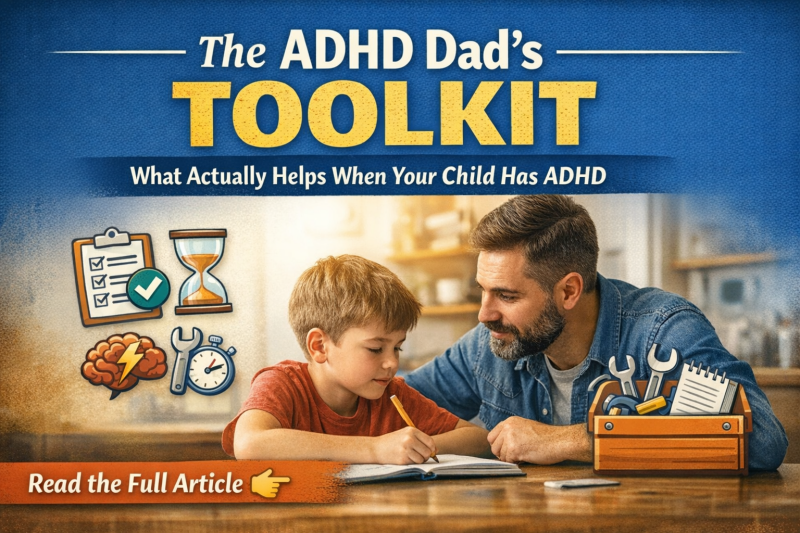
The ADHD Dad’s Toolkit: A Dad's Guide To What Actually Helps When Your Child Has ADHD
Dr. Anders Osborne, Ph.D.
ADHD Specialist & Educator | 30+ years educating educators and parents of ADHD youth and teens
Founder, I Teach To Reach ADHD Coaching LLC & Thriving With ADHD™
“Assembling the pieces between the non-divergent world and the brilliance of being ADHD.”
The ADHD Dad’s Toolkit: A Dad's Guide To What Actually Helps When Your Youth Has ADHD
Updated March 2026 to include additional guidance and resources for parents raising ADHD youth and teens.
●
Why do ADHD children and teens struggle with everyday routines, schoolwork, and emotional regulation?
Children and teens with ADHD often experience challenges with executive function, which affects the brain’s ability to plan, organize, start tasks, manage time, and regulate emotions. These difficulties can make everyday situations—such as homework, morning routines, friendships, and school expectations—feel overwhelming. With the right guidance and practical strategies, however, ADHD youth and teens can learn skills that help them succeed at home, at school, and in relationships. These are the kinds of challenges I address in my work with ADHD families and educators.
●
Supporting ADHD youth and teens is a journey for families as well as educators. Many parents appreciate having practical tools they can return to when challenges arise at home or at school. If you would like more structured guidance on routines, emotional regulation, study skills, and nutrition for ADHD brains, you can explore my ADHD resource books for families.
Thriving With ADHD™ – An Introduction: A Parent’s Guide
StudySmart™ – Test Taking and Study Skills for ADHD Youth and Teens
FuelRight™ – Nutrition and Brain Support for ADHD Youth and Teens
ImpulseMastery™ – Emotional Regulation and Self-Control for ADHD Youth and Teens
OrganizeMe™ – Structure and Time Skills for ADHD Families
You can explore these resources here:
https://payhip.com/ThrivingWithADHD
Dr. Anders Osborne, Ph.D.
ADHD Specialist & Educator | ADHD Adult | Parent & Grandparent
Founder, I Teach To Reach ADHD Coaching LLC & Thriving With ADHD™
Substack: https://dranders.substack.com
Assembling the pieces between the non-divergent world and the brilliance of being ADHD.
~~~~~~~~~~~~~~`
Raising a child with ADHD can leave many dads feeling frustrated, unsure, and quietly questioning whether they’re doing enough—or doing it right.
In The ADHD Dad’s Toolkit, Dr. Anders Osborne, Ph.D. explains why ADHD parenting challenges are not a failure of effort, but a mismatch between traditional discipline and how the ADHD brain actually works. This article breaks down what ADHD looks like at home, why “trying harder” often backfires, and which skill-based strategies truly help dads reduce power struggles and improve communication.
Readers will learn how clear structure, calm authority, and short, effective communication can transform everyday moments—from morning routines to homework time—into opportunities for connection rather than conflict. The article also highlights the importance of emotional regulation and repair, helping dads build trust and long-term resilience in their ADHD children.
This is not theory. It’s a practical, compassionate guide written for dads who want real tools they can use immediately.
👉 Read the Full Article on Substack
The ADHD Dad’s Toolkit: What Actually Helps When Your Child Has ADHD
🔗 https://dranders.substack.com
👉 Need Personal Support?
If you’d like help applying these strategies to your own child and home, Dr. Osborne offers ADHD parent and dad-focused coaching.
🔗 Book a free 15-minute intro call:
https://workee.net/@drandersosborne
Dr. Anders Osborne, Ph.D.
Master ADHD Coach | Educator | Author
Founder of Thriving With ADHD™
Photo is copyright protected by author.
• Dr. Anders Osborne PhD
• Dr. Anders Osborne ADHD Specialist
• Thriving With ADHD
• Thriving With ADHD with Dr. Anders Osborne PhD
• I Teach To Reach ADHD Coaching
• ADHD Specialist for families
• ADHD educator and parent coach
• ADHD youth and teens
• ADHD parent support
• https://www.i-teach-to-reach-adhd-coaching.com
• ADHD parenting books
• ADHD books for parents
• ADHD help for families
• practical ADHD strategies
• ADHD routines for kids
• ADHD behavior tools
• executive function skills for ADHD
• ADHD life skills training
• ADHD organization skills
• ADHD emotional regulation tools
• ADHD study skills
• ADHD nutrition and food for focus
• skill-building courses for ADHD
• ADHD coaching for parents
• ADHD family systems
The Dad's Toolkit. The ADHD Dad Playbook: Simple Tools for Raising Successful ADHD Youth and Teens
Updated March 2026 to include additional guidance and resources for parents raising ADHD youth and teens.
●
Why do ADHD children and teens struggle with everyday routines, schoolwork, and emotional regulation?
Children and teens with ADHD often experience challenges with executive function, which affects the brain’s ability to plan, organize, start tasks, manage time, and regulate emotions. These difficulties can make everyday situations—such as homework, morning routines, friendships, and school expectations—feel overwhelming. With the right guidance and practical strategies, however, ADHD youth and teens can learn skills that help them succeed at home, at school, and in relationships. These are the kinds of challenges I address in my work with ADHD families and educators.
●
Supporting ADHD youth and teens is a journey for families as well as educators. Many parents appreciate having practical tools they can return to when challenges arise at home or at school. If you would like more structured guidance on routines, emotional regulation, study skills, and nutrition for ADHD brains, you can explore my ADHD resource books for families.
Thriving With ADHD™ – An Introduction: A Parent’s Guide
StudySmart™ – Test Taking and Study Skills for ADHD Youth and Teens
FuelRight™ – Nutrition and Brain Support for ADHD Youth and Teens
ImpulseMastery™ – Emotional Regulation and Self-Control for ADHD Youth and Teens
OrganizeMe™ – Structure and Time Skills for ADHD Families
You can explore these resources here:
https://payhip.com/ThrivingWithADHD
Dr. Anders Osborne, Ph.D.
ADHD Specialist & Educator | ADHD Adult | Parent & Grandparent
Founder, I Teach To Reach ADHD Coaching LLC & Thriving With ADHD™
Substack: https://dranders.substack.com
Assembling the pieces between the non-divergent world and the brilliance of being ADHD.
~~~~
Dr. Anders Osborne, Ph.D.
ADHD Specialist & Educator | 30+ years educating educators and parents of ADHD youth and teens
Founder, I Teach To Reach ADHD Coaching LLC & Thriving With ADHD™
“Assembling the pieces between the non-divergent world and the brilliance of being ADHD.”
~~~~~~~
If you are a dad raising an ADHD child or teenager, this article gives you simple, effective strategies that build connection, reduce conflict, and strengthen your child’s confidence and emotional regulation. ADHD youth need clarity, pacing, and emotional safety. And dads have incredible influence in shaping these skills — without perfection, pressure, or overwhelm.
Read complete article on https://dranders.substack.com/
ADHD dads, ADHD parenting tools, ADHD teen motivation, emotional regulation strategies, ADHD shutdown help, ADHD youth support, ADHD playbook for dads, ADHD scripts for parents, ADHD communication tools, executive function strategies
A Dad's Toolkit. “How Do I Help My ADHD Teen Stay Motivated When They Shut Down?” A Dad's Guide.
Updated March 2026 to include additional guidance and resources for parents raising ADHD youth and teens.
●
Why do ADHD children and teens struggle with everyday routines, schoolwork, and emotional regulation?
Children and teens with ADHD often experience challenges with executive function, which affects the brain’s ability to plan, organize, start tasks, manage time, and regulate emotions. These difficulties can make everyday situations—such as homework, morning routines, friendships, and school expectations—feel overwhelming. With the right guidance and practical strategies, however, ADHD youth and teens can learn skills that help them succeed at home, at school, and in relationships. These are the kinds of challenges I address in my work with ADHD families and educators.
●
Supporting ADHD youth and teens is a journey for families as well as educators. Many parents appreciate having practical tools they can return to when challenges arise at home or at school. If you would like more structured guidance on routines, emotional regulation, study skills, and nutrition for ADHD brains, you can explore my ADHD resource books for families.
Thriving With ADHD™ – An Introduction: A Parent’s Guide
StudySmart™ – Test Taking and Study Skills for ADHD Youth and Teens
FuelRight™ – Nutrition and Brain Support for ADHD Youth and Teens
ImpulseMastery™ – Emotional Regulation and Self-Control for ADHD Youth and Teens
OrganizeMe™ – Structure and Time Skills for ADHD Families
You can explore these resources here:
https://payhip.com/ThrivingWithADHD
Dr. Anders Osborne, Ph.D.
ADHD Specialist & Educator | ADHD Adult | Parent & Grandparent
Founder, I Teach To Reach ADHD Coaching LLC & Thriving With ADHD™
Substack: https://dranders.substack.com
Assembling the pieces between the non-divergent world and the brilliance of being ADHD.
~~~~~~~~~~~~`
Dr. Anders Osborne, Ph.D.
ADHD Specialist & Educator | 30+ years educating educators and parents of ADHD youth and teens
Founder, I Teach To Reach ADHD Coaching LLC & Thriving With ADHD™
“Assembling the pieces between the non-divergent world and the brilliance of being ADHD.”
If you have an ADHD teen, you’ve likely seen it:
You ask them to start homework… and they say “in a minute.”
You remind them again… and they shut down.
You offer help… and they get frustrated.
You tell them it’s important… and they walk away.
Thanks for reading Thriving With ADHD Newsletter! Subscribe for free to receive new posts and support my work.
It feels personal. It feels confusing. It feels like they don’t care.
But here’s the truth most parents never hear:
Your teen’s shutdown is not a behavior problem. It’s a neurological overwhelmed response.
I want to teach you why this happens, what’s actually going on inside the ADHD brain, and exactly how you can help your teen restart with confidence instead of shame or fear.
Section 1 — Why ADHD Teens Shut Down: The Neuroscience Behind the Freeze
ADHD shutdown is an executive function overload, not a lack of motivation.
When demands exceed their internal resources, ADHD teens don’t push harder—
they push away.
Why?
Because several things are happening at once:
1. Working memory overload
They cannot hold all the steps in their mind long enough to begin.
2. Task initiation paralysis
ADHD makes “getting started” far harder than the task itself.
3. Emotional flooding
Fear of failure, embarrassment, perfectionism, and frustration quickly stack up.
4. Dopamine drop
Tasks that feel overwhelming trigger a neurological “shutdown response.”
5. Past experiences of failing create learned helplessness
If they’ve struggled before, their brain predicts they will struggle again.
The result?
A teen who looks unmotivated but is actually overwhelmed.
And overwhelmed brains do not move forward—they freeze.
Section 2 — What Parents Accidentally Do That Makes Shutdown Worse
Parents love their children. Parents want their teens to succeed.
But when your child shuts down, it is easy to slip into responses that—without meaning to—make things harder.
Here are the three most common:
1. Repeating the reminder or lecture
When a teen is already overwhelmed, more words increase pressure.
Their brain hears:
“You’re failing.”
“You should already be doing this.”
“You’re not good enough.”
2. Raising the urgency
“You have to get this done or you’ll fail the class.”
“This is due tomorrow!”
“You’re running out of time!”
Urgency increases cortisol, which decreases motivation.
3. Trying to fix it for them too quickly
Jumping in with solutions can feel intrusive, not supportive.
What they really need is co-regulation, not correction.
Section 3 — What Actually Works When Your ADHD Teen Shuts Down
To help your teen restart, you must reduce pressure, increase clarity, and rebuild safety.
Here’s your step-by-step approach:
⭐️ STEP 1: Regulate yourself first
Your calm nervous system helps theirs stabilize.
Say:
“Let’s pause for a second so we can figure this out together.”
Your tone sets the stage for success.
⭐️ STEP 2: Validate the overwhelm
Validation is not giving in.
Validation is acknowledging reality.
Say:
“I can see this feels big right now.”
or
“I can tell you’re stuck, and that’s okay. We can work it out.”
This lowers defensiveness and restores connection.
⭐️ STEP 3: Break the task into the first micro-step
Not the whole assignment—just the entry point.
Instead of:
“Start your homework.”
Try:
“Let’s just open the Google Doc together.”
“Let’s just write the title.”
“Let’s just find the worksheet.”
Momentum begins with clarity, not pressure.
⭐️ STEP 4: Co-regulate through action
ADHD teens do better when someone is nearby—not doing the work for them, but sitting in shared space.
Examples:
“Want me to sit with you while you start?”
“Let’s set a 5-minute timer together.”
“Let’s make this feel doable.”
Your presence reduces executive function load.
⭐️ STEP 5: Create a low-stress “restart script”
Here’s a simple script you can use anytime your teen freezes:
Restart Script:
“Okay, we’re stuck. What’s the smallest step you feel able to do right now?
Not the assignment—just the next 30 seconds.”
This clarifies the path forward.
⭐️ STEP 6: Celebrate effort, not outcome
ADHD motivation is built on dopamine reinforcement.
Celebrate:
✔ sitting down
✔ opening the assignment
✔ writing the first sentence
✔ staying with it for 5 minutes
Effort fuels momentum. Momentum fuels motivation.
Section 4 — Long-Term Strategies to Prevent Shutdowns Before They Start
These strategies build resilience over time:
⭐️ 1. Create a predictable routine
Routines reduce mental load.
Predictability calms the ADHD brain.
⭐️ 2. Use visual planning tools
Teens need tasks they can see, not just hear.
Use:
A visual weekly calendar
Color-coded subjects
Homework checklists
Assignment breakdown sheets
⭐️ 3. Establish “start rituals”
A consistent way to begin work builds initiation muscle.
Examples:
Fill water bottle
Two deep breaths
Open the laptop
Set a 5-minute timer
Train the brain: “This is how we start.”
⭐️ 4. Build skill, not willpower
Motivation is not a personality trait.
It is a skill that is taught, practiced, and reinforced.
Teach your teen:
How to break down tasks
How to use timers
How to ask for help without shame
How to pause instead of panic
These skills follow them into adulthood.
⭐️ 5. Use the “Two-Option Strategy”
ADHD teens do better when they don’t feel trapped.
Example:
“Do you want to start with English or Math?”
“Do you want me nearby or in the next room?”
Two options restore autonomy.
Section 5 — What Teachers Can Do to Support Shutdown-Prone Teens
Teachers play a critical role in motivation. Here’s what helps most:
✔ Clear written instructions
✔ Chunked assignments
✔ Extra time to initiate
✔ Visual examples
✔ Frequent check-ins
✔ A calm, supportive tone
And most importantly:
✔ Understanding that shutdowns are not rebellion
They are neurological overload.
When school and home work together, teens thrive.
Conclusion — Your Teen Is Not Failing. Their Brain Is Asking for Help.
Shutdown is a signal, not a character flaw.
With the right support, your teen can learn to pause, reset, restart, and finish strong. You are not alone in this work. Your teen is not broken. Together, you can create a rhythm that works for both of you—one that builds independence, confidence, and resilience.
Dr. Anders Osborne, Ph.D.
Founder, I Teach To Reach ADHD Coaching LLC
“Assembling the pieces between the non-divergent world and the brilliance of being ADHD.”
🌐 Website: https://www.i-teach-to-reach-adhd-coaching.com
🎓 Coaching Website:
Ready for personalized ADHD support? Call for a free 15 minute consultation
https://iteachtoreach.workee.net/
📝 Medium: https://medium.com/@drandersosborne
📧 Email: iteachtoreach@gmail.com
ADHD motivation, ADHD teen shutdown, ADHD executive function, ADHD overwhelm, how to help ADHD teen focus, ADHD school strategies, dopamine and motivation, ADHD emotional regulation, ADHD parenting support, ADHD study skills, ADHD time management, ADHD task initiation help.
• Dr. Anders Osborne PhD
• Dr. Anders Osborne ADHD Specialist
• Thriving With ADHD
• Thriving With ADHD with Dr. Anders Osborne PhD
• I Teach To Reach ADHD Coaching
• ADHD Specialist for families
• ADHD educator and parent coach
• ADHD youth and teens
• ADHD parent support
• https://www.i-teach-to-reach-adhd-coaching.com
• ADHD parenting books
• ADHD books for parents
• ADHD help for families
• practical ADHD strategies
• ADHD routines for kids
• ADHD behavior tools
• executive function skills for ADHD
• ADHD life skills training
• ADHD organization skills
• ADHD emotional regulation tools
• ADHD study skills
• ADHD nutrition and food for focus
• skill-building courses for ADHD
• ADHD coaching for parents
• ADHD family systems
The Dad's toolkit. The ADHD Success Formula-Four Steps Any Dad Can Start Tonight
ADHD Specialist & Educator | 30+ years educating educators and parents of ADHD youth and teens
Founder, I Teach To Reach ADHD Coaching LLC & Thriving With ADHD™
“Assembling the pieces between the non-divergent world and the brilliance of being ADHD.”
If you’re reading this, you’ve likely spent countless hours trying sticker charts, behavior contracts, screen-time rewards—only to find that ADHD continues to derail the peace in your home. I understand this deeply. I’m Dr. Anders Osborne, Ph.D. in ADHD and Learning Disabilities, an adult with ADHD, and a mother of an ADHD son. Over the past 30 years, I’ve worked with thousands of families and educators around the world to teach the vital executive function skills every ADHD child needs to thrive.
Through years of observation, research, and personal experience, I’ve distilled the chaos into clarity. What works—across homes, classrooms, and cultures—consistently aligns with what I call The ADHD Success Formula. These four pillars create a structure strong enough to support your child’s growth and flexible enough to adapt to daily realities.
Let me walk you through each step, offering practical strategies tailored to both youth (ages 8–12) and teens (ages 13–18). These actions are grounded in evidence-based principles and real-world parenting wisdom. You can begin tonight.
Step 1: Embrace the ADHD Brain
Insight: Acceptance is the foundation of resilience
Families often begin their ADHD journey in a state of resistance—wanting their child to act more “typical.” But research is clear: when a child feels seen, heard, and understood as neurodivergent—not broken—their confidence grows, and their ability to engage with challenges improves.
For Youth (Ages 8–12):
-
Neurodiversity Night: Over dinner, name three things your child is naturally good at because of their ADHD brain—creativity, humor, curiosity.
-
Change the Narrative: Swap judgmental language. Instead of “you’re too distracted,” say “your brain gets excited by many things at once.”
-
Highlight Role Models: Read a short bio about someone like Michael Phelps or Simone Biles who succeeded with ADHD—and discuss how their differences became strengths.
For Teens (Ages 13–18):
-
Reflective Journaling Prompt: “Where has your unique brain helped you solve a problem others couldn’t?”
-
Strengths Mapping: Have your teen list what peers come to them for—humor, support, quick ideas—and explore how these connect to their ADHD traits.
-
Watch and Discuss: Choose TED Talks or short YouTube videos by successful adults with ADHD and have an open conversation about mindset and identity.
Step 2: Build Self-Awareness
Insight: Emotional regulation begins with self-recognition
Self-awareness is not automatic for ADHD children—it must be intentionally cultivated. It is a critical executive function skill that allows kids to notice their thoughts, behaviors, and feelings before reacting. Without it, impulse takes the wheel.
For Youth (Ages 8–12):
-
Mood Check Visuals: Use simple green/yellow/red charts to check how they’re feeling before school or homework.
-
Body Clues Game: Build a “body language bingo” with sensations like tight stomach, fidgety hands, or yawns—then talk about what those clues mean.
For Teens (Ages 13–18):
-
Trigger Journals: Have them jot down when they lost focus or got upset and note what led up to it. Review together weekly.
-
Energy Reset Tool: Set two reminders on their phone during the day. When it buzzes, they pause, breathe deeply, and label their current mental state.
Self-awareness allows youth to slow down long enough to make healthier choices—whether in class, on social media, or with peers.
Step 3: Assemble Support Systems
Insight: Your child needs a synchronized network, not heroic independence
ADHD youth don’t outgrow the need for scaffolding. They outgrow systems that don’t evolve. Thriving students have invisible scaffolds built by informed parents, collaborative educators, and supportive peers.
At Home:
-
Sunday Planning Huddle: Choose one time each weekend to gather, celebrate the past week’s effort, and preview what’s ahead.
-
Visual Task Systems: Use a magnetic board or index cards sorted into "To Do," "Doing," and "Done." Seeing progress in real-time builds momentum.
At School:
-
504 or IEP Advocacy: Reach out early in the school year with documentation. Ask for supports like extended test time, reduced homework volume, movement breaks, and audiobook access.
-
Effective Teacher Emails: Send a short introductory letter that shares your child’s strengths, past struggles, and what strategies work well at home. Stay positive, solution-focused, and warm.
In the Community:
-
Peer Pairing: Link your child with a classmate for project reminders or co-working sessions.
-
Skill-Building Spaces: Whether it’s robotics club, swim team, or gaming tournaments—engagement builds confidence and skill transfer.
Step 4: Deploy Brain-Aligned Strategies
Insight: ADHD brains thrive on structure, novelty, and immediate feedback
Effective tools aren’t trendy—they’re tailored. The best strategies are simple, visible, and sustainable. Think in terms of scaffolds, not fixes.
Academic Focus:
-
Pomodoro Rounds: Work for 20 minutes, break for 5. Use a kitchen timer or a phone app with visual countdowns.
-
Voice First, Write Second: Let them record thoughts into a phone memo before writing. This bypasses writing paralysis and captures ideas quickly.
Organization:
-
One Planner Rule: Whether it’s digital or paper, teach your child to rely on a single capture system.
-
Weekly Reset Ritual: Sunday evenings = backpack cleanout, charger check, and supply stock-up. Make it social, not stressful.
Emotional Regulation:
-
Name – Tame – Frame: Teach them to name the feeling, take three deep breaths, and frame a next step (“I’m anxious… I’ll take one action”).
Impulse Control:
-
If-Then Cards: "If I feel like yelling, then I will squeeze my hands for 3 seconds." Role-play daily until it becomes automatic.
-
Micro-Movement Playlist: A curated list of 3 one-minute songs they can jump, dance, or push-up through for reset.
Putting It All Together Tonight
You don’t have to fix everything at once. But you can start something powerful today.
-
Share the Formula: Talk about these four pillars with your child. Ask which one feels easiest to begin.
-
Track Together: Draw four simple boxes: Embrace, Awareness, Support, Strategy. Add a sticker or checkmark when any action is practiced.
-
Celebrate Effort: ADHD kids respond to encouragement. Praise the process: "I noticed you paused before reacting—huge progress!"
Remember: Momentum comes from consistency, not perfection.
Final Thoughts from Dr. Osborne
Parenting a neurodivergent child is a path of both challenge and transformation. I’ve walked it as a mother and dedicated my life to guiding others through it as an educator. You are not alone. There are proven ways to support your child’s brilliance—and they begin with connection, understanding, and structure.
Let’s build a world where your child can thrive with ADHD—starting tonight.
-
ADHD and working memory issues
-
ADHD and emotional overwhelm
-
difficulty following directions ADHD
-
ADHD procrastination teens
-
ADHD parenting guidance
-
ADHD support strategies home and school
-
ADHD routines and structure for kids
-
ADHD and social skills challenges
-
what ADHD really looks like
-
ADHD common parent questions
A Dad's Toolkit .How Do I Know If My Child Really Has ADHD — What Signs Should I Look For? A Dad's Guide
Dr. Anders Osborne, Ph.D.
ADHD Specialist & Educator | 30+ years educating educators and parents of ADHD youth and teens
Founder, I Teach To Reach ADHD Coaching LLC & Thriving With ADHD™
“Assembling the pieces between the non-divergent world and the brilliance of being ADHD.”
Parents often sense something is different long before a teacher, doctor, or school team raises concerns. You may notice a level of distractibility, impulsivity, or emotional intensity that other children don’t show. You may worry that your child is falling behind—not because they’re not smart, but because something invisible is getting in their way.
This guide will help you understand the REAL early signs of ADHD in children and teens, what’s developmentally normal vs. what’s persistent enough to merit an evaluation, and how to talk with your child and school team to get the support they need.
This is one of the most searched questions on AI and Google, and for good reason:
Parents want answers grounded in clarity, compassion, and science—not judgment.
Let’s take this step by step.
What ADHD Really Looks Like in Everyday Life
Most parents don’t come in saying, “I think my child has ADHD.”
They say:
“They’re so bright, but they can’t finish anything.”
“They melt down over the smallest things.”
“Homework takes three hours and ends in tears.”
“They can’t get ready in the morning without 20 reminders.”
“They’re impulsive, emotional, and easily overwhelmed.”
ADHD is not a child “misbehaving.” It’s a brain wiring difference that affects executive function—attention, working memory, impulse control, and the ability to transition or self-regulate.
And it shows differently in youth (ages 8–12) than it does in teens (13–18).
Signs of ADHD in Youth (Ages 8–12)
1. Difficulty staying focused on tasks
Your child may:
Drift off during homework
Start 10 tasks and finish none
Seem “here but not here”
This isn’t laziness—it's a brain that struggles to regulate attention, even with strong motivation.
2. Impulsive reactions or emotional outbursts
Younger children show ADHD through action more than words.
They may:
Interrupt often
Blurt out answers
Have quick, intense emotional reactions
Get frustrated when things don’t go as planned
3. Trouble with routines
You may notice daily battles around:
Morning schedule
Homework
Bedtime
Transitions between activities
ADHD youth often can’t “sequence” steps without visual support.
4. Difficulty following multi-step directions
“Go upstairs, get your shoes, brush your teeth, and come back down”
often becomes:
Shoes but not teeth
Toothbrush but no shoes
Or nothing at all
This is a working-memory deficit—not defiance.
5. Social struggles
Children with ADHD may:
Play too intensely
Interrupt peers
Misinterpret social cues
Get left out or criticized
Often, they know things went wrong but don’t know what to do differently.
Signs of ADHD in Teens (Ages 13–18)
ADHD shifts in adolescence. It becomes more internal, more emotional, and often more overwhelming.
1. Chronic procrastination and “can’t get started”
Teens may:
Avoid assignments until the last minute
Feel paralyzed by tasks
Say “I can’t do it” even when they want to succeed
This is an initiation deficit—not a motivation problem.
2. Organization problems
ADHD teens often:
Lose assignments
Forget deadlines
Misplace backpacks, chargers, notebooks
Struggle to break down large projects
3. Emotional dysregulation
You may see:
Intense frustration
Anxiety around school
Overwhelm that leads to shutdowns
Sensitivity to rejection or criticism
RSD (Rejection Sensitive Dysphoria) is common in ADHD teens.
4. Academic inconsistencies
A teen may get an A one week and a D the next.
This inconsistency is a hallmark of ADHD—not a lack of intelligence.
5. Sleep issues
ADHD teens often:
Stay up too late
Wake up exhausted
Have irregular sleep patterns
This is linked to delayed circadian rhythm and executive function challenges.
What’s “Normal Kid Behavior” vs. ADHD?
✔ Normal behavior:
Occasional distractibility, occasional emotional reactions, occasional forgetfulness.
✔ ADHD behavior:
Persistent, frequent, and affecting daily life at home, school, and socially.
Think in terms of frequency, intensity, and impact.
If your child:
struggles daily
across multiple environments
for at least 6 months
despite structure and support
…it may be time to consider an evaluation.
What Parents Should Do Next
If these signs resonate deeply with you, here’s what to do:
1. Start documenting what you observe.
Write down:
What happens
How often
What triggers it
How it affects school or home
2. Speak to your child with compassion.
Try:
“Everyone’s brain works differently. We’re trying to understand how yours works best.”
This reduces fear and shame.
3. Request a school evaluation or speak with your pediatrician.
Most schools will screen for attention, executive function, and academic impact.
4. Begin skill-building immediately.
ADHD is not just about medication—skills matter.
Focus on:
Organization
Time management
Emotional regulation
Study strategies
Social communication
You teach these every day as a parent.
Actionable Tips for Parents
✔ Use visual schedules for younger children
Pictures, colors, or charts work better than verbal reminders.
✔ Teach teens to use timers, checklists, and phone reminders
These build independence and reduce overwhelm.
✔ Break tasks into small steps
Younger kids and teens both benefit from:
Do → Break → Do → Break
✔ Praise effort, not outcome
ADHD students respond best to:
“You tried so hard on that step. I see your progress.”
✔ Keep home routines predictable
Structure reduces emotional load.
Conclusion: Trust Your Instincts
If you're reading this article, it’s because something within you already knows something is off.
Parents are rarely wrong.
ADHD is manageable. With early identification, skill-building, and compassionate guidance, your child can thrive—in school, at home, and in life. And you don’t have to do it alone.
Quick Summary
This article helps parents recognize the signs of ADHD in children and teens, differentiate between normal behaviors and true executive-function challenges, and understand when to pursue evaluation. It also provides actionable steps and routines to support ADHD youth at home and school.
What You’ll Learn
Clear signs of ADHD in ages 8–12 and 13–18
What “normal” vs. “persistent” behaviors look like
Emotional, academic, and social markers of ADHD
Steps for evaluation and everyday support
Skill-building strategies parents can begin today
Why This Topic Matters
Early recognition prevents shame, academic decline, and unnecessary conflict at home. Understanding ADHD as a brain-based difference—NOT a behavioral or parenting issue—empowers families to support their youth and teens with confidence.
Key Takeaway
If your child’s struggles persist across home, school, and social life—and especially if they impact daily functioning—it may be ADHD. Early support builds lifelong success.
About the Author
Dr. Anders Osborne, Ph.D., is an ADHD educator and parenting specialist helping families build skills in attention, organization, emotional regulation, study habits, and social communication.
Dr. Anders Osborne, Ph.D.
Founder, I Teach To Reach ADHD Coaching
“Assembling the pieces between the non-divergent world and the brilliance of being ADHD.”
🌐 https://www.i-teach-to-reach-adhd-coaching.com
📚 https://books.by/thriving-with-adhd-one-chapter-at-a-time
📰 Substack: https://dranders.substack.com
✍️ Medium: https://medium.com/@drandersosborne
📧 iteachtoeach@gmail.com
-
ADHD signs in children
-
ADHD symptoms in teens
-
how to tell if my child has ADHD
-
executive function ADHD
-
ADHD diagnosis questions parents ask
-
ADHD behaviors vs normal behavior
-
early signs of ADHD youth
-
ADHD emotional dysregulation kids
-
ADHD task initiation teens
-
ADHD school struggles
-
ADHD evaluation steps for parents
What Teens & Youth with ADHD Are Asking AI. What Dad's Need To Know
What Teens & Youth with ADHD Are Asking AI: How Digital Tools Help Them Focus, Manage Time, and Organize Homework
Dr. Anders Osborne, Ph.D.
ADHD Specialist & Educator | 30+ years educating educators and parents of ADHD youth and teens
Founder, I Teach To Reach ADHD Coaching LLC & Thriving With ADHD™
“Assembling the pieces between the non-divergent world and the brilliance of being ADHD.”
Quick Summary
This article explores why ADHD youth and teens are increasingly turning to AI for help with focus, homework planning, task initiation, and time management. Rather than avoiding responsibility, these students are reaching for structure—seeking tools that break large assignments into steps, create schedules, and provide reminders without judgment.
If your child struggles with procrastination, overwhelm, staying organized, knowing where to start, or keeping up with school demands, this guide explains exactly what AI can and cannot do—and how parents and teachers can use AI responsibly as a scaffold for executive function growth.
What You’ll Learn in This Article
Why ADHD students freeze, shut down, or feel overwhelmed by starting tasks
What teens are actually asking AI—and why
How AI helps break assignments into manageable steps
How time-blindness + working-memory issues contribute to overwhelm
How parents can guide healthy AI use without enabling avoidance
How teachers can integrate AI for planning, not cheating
Long-term strategies to strengthen time management and organization skills
Why This Topic Matters
ADHD students often face invisible challenges with:
task initiation
sequencing
prioritization
organizing information
managing deadlines
sustaining focus
These barriers aren’t character flaws—they’re neurological differences.
When teens turn to AI with questions like:
“Help me focus.”
“Break this into steps.”
“Tell me what to do first.”
They aren’t trying to cut corners—they’re reaching out for structure, clarity, and calm.
AI provides instant support that reduces overwhelm, quiets anxiety, and gives them a doable starting point.
When families and educators understand the brain behind the behavior, they can help students use AI:
responsibly
ethically
confidently
and in ways that genuinely build lifelong executive-function skills
This article helps parents and teachers guide AI use while strengthening the relationship and empowering the child.
Key Takeaway for Parents and Educators
AI is not a shortcut—it's a scaffold.
When ADHD youth and teens use AI to break down steps, create routines, or manage time, they’re not avoiding the work—they’re seeking the structure their brain needs to succeed.
With the right guidance, AI becomes a tool for:
building independence
reducing overwhelm
increasing follow-through
supporting emotional regulation
strengthening executive function
helping students believe “I can do this.”
You don’t need to remove the challenge—just remove the confusion around where to start.
👉 Click to read the complete article on Substack:
🔗 https://dranders.substack.com
🌟 About the Author
Dr. Anders Osborne, Ph.D. is an ADHD educator, author, and coach who specializes in helping ADHD youth and teens develop executive function, emotional regulation, confidence, and strong learning routines—at school, at home, and in everyday life.
She is the founder of I Teach to Reach ADHD Coaching and teaches parents, educators, and students how to build practical, strengths-based strategies that last a lifetime.
⭐ Stay Connected
🌐 Website: https://www.i-teach-to-reach-adhd-coaching.com
📰 Substack ADHD Newsletter: https://dranders.substack.com
✍️ Medium: https://medium.com/@drandersosbornephd
📧 Email: iteachtoeach@gmail.com
-
ADHD teens
-
ADHD youth
-
ADHD executive function
-
AI homework help ADHD
-
ADHD time management tools
-
ADHD study skills
-
ADHD focus strategies
-
AI and ADHD parenting
-
ADHD organization strategies
-
Thriving with ADHD
-
I Teach To Reach ADHD Coaching
ADHD Emotional Overwhelm: What Parents Can Do in the Moment—and What Works Long Term
By Dr. Anders Osborne, Ph.D.
“Assembling the pieces between the non-divergent world and the brilliance of being ADHD.”
"ADHD Emotional Overwhelm: What Parents Can Do in the Moment—and What Works Long Term."
By Dr. Anders Osborne, Ph.D.
“Assembling the pieces between the non-divergent world and the brilliance of being ADHD.”
Quick Summary
This article explains why ADHD youth and teens experience rapid, intense emotional overwhelm, and what parents can do to help their child in the moment without yelling, lecturing, or power struggles.
It also provides long-term, neuroscience-informed strategies that build confidence, resilience, and emotional regulation skills over time.
If your child struggles with big reactions, meltdowns, shutting down, frustration, or emotional overload, this guide shows you exactly how to help them immediately—while also giving them tools they can use for life.
What You’ll Learn in This Article
Why ADHD brains shift into overwhelm so quickly
What emotional dysregulation actually is
What parents can do in the moment to help a child calm down
How to reduce overwhelm by changing routines and environment
Parent scripts that work for both youth (6–12) and teens (13–18)
Long-term supports that strengthen emotional control
Why This Topic Matters
ADHD students experience emotions more intensely, more rapidly, and with slower recovery than their neurotypical peers.
Emotional overwhelm is not intentional misbehavior—it is a neurological overload.
When parents understand the brain behind the behavior, they can respond with strategies that:
Lower anxiety
Reduce conflict
Build trust
Teach lifelong coping skills
This article helps parents and educators support the child and strengthen the relationship.
Key Takeaway for Parents and Educators
You don’t need to stop an emotion—you need to anchor the moment.
When ADHD youth and teens feel safe, seen, and understood, they return to calm faster and learn to regulate their emotions more effectively over time.
👉 Read the Full Article Here
Click to read the complete article on Substack:
🔗 https://dranders.substack.com
🌟 About the Author
Dr. Anders Osborne, Ph.D. is an ADHD educator, author, and coach who specializes in helping ADHD youth and teens build emotional regulation, executive function skills, and confidence—at school, at home, and in everyday life.
⭐ Stay Connected
🌐 Website: https://www.i-teach-to-reach-adhd-coaching.com
📰 Substack ADHD Newsletter: https://dranders.substack.com
✍️ Medium: https://medium.com/@drandersosbornephd
📧 Email: iteachtoeach@gmail.com
-
ADHD,ADHD Youth,ADHD Teens,ADHD Parenting,Executive Function,Neurodivergent Students,ADHD School Support,AI Tools,ADHD Education,ADHD Coaching,504 Plans,IEP Advocacy,Thriving with ADHD,
The Best AI Tools for ADHD Youth & Teens (2025): What Works, What’s Hype, and How Parents Can Guide Ethical AI Use at Home and School
The Best AI Tools for ADHD Youth & Teens (2025): What Works, What’s Hype, and How Parents Can Guide Ethical AI Use at Home and School
By Dr. Anders Osborne, Ph.D.
“Assembling the pieces between the non-divergent world and the brilliance of being ADHD.”
A Beginning All Too Familiar
Last October, a mother sat across from me at her kitchen table, laptop open, hands wrapped around a lukewarm cup of coffee. Her son — a bright, curious 11-year-old with ADHD — had just spent two hours trying to start a single paragraph for a school writing assignment. Eventually, he slammed his pencil down and shouted the words I hear from ADHD children all over the country:
“I can’t do this! My brain won’t start!”
This meltdown didn’t come from laziness.
Or attitude.
Or lack of intelligence.
It came from overwhelm. It came from executive-function challenges. It came from the mental “static” ADHD children feel when faced with long instructions, unclear expectations, or multi-step tasks.
That evening, his mother opened her laptop again — and for the first time, she asked the question so many parents are asking in 2025:
“Can AI actually help my ADHD child learn?”
The short answer: Yes, it can.
But the fuller truth is this:
It depends on the tool. It depends on the child. It depends on the school’s policies.
And it absolutely depends on how we use it.
This is the story of what I’ve learned — and the guide I wish every ADHD family had before stepping into the new world of AI-supported learning.
Why AI Feels Like a Lifeline for ADHD Families
Families raising ADHD youth and teens are exhausted — not from parenting, but from constantly managing:
-
unfinished assignments
-
forgotten directions
-
lost instructions
-
emotional overload
-
reading frustration
-
writing resistance
-
and the relentless feeling of being “behind everyone else”
So when AI entered the mainstream, parents hoped for something simple:
Maybe this could help us catch our breath.
Maybe this could help my child feel confident again.
But then came the next wave of questions:
-
Will AI make my child dependent?
-
Is AI cheating?
-
What are the safe tools?
-
Will the school allow this?
-
Will AI hurt their long-term skills?
-
What if they rely on AI instead of thinking?
These questions are real. They matter. And they deserve honest, evidence-based answers.
That’s what this guide provides.
Before Anything Else — Parents Must Do This One Thing
Before any child uses AI for schoolwork, every parent should ask the teacher:
“What AI tools are allowed at school, and what is prohibited?”
This single question prevents:
-
accidental plagiarism
-
zeroes on assignments
-
misunderstandings
-
discipline issues
-
broken trust with teachers
-
unintentional rule violations
Teachers are navigating new territory too. Many schools have:
-
AI usage policies
-
guidelines for writing assignments
-
rules about Grammarly, ChatGPT, or Khanmigo
-
rules about AI-generated outlines
-
rules about reading supports
-
restrictions on AI tutors
-
restrictions on AI paraphrasing tools
Some schools encourage AI. Others forbid it. Many fall somewhere in between.
Parents must know what’s allowed before introducing AI as a support at home.
AI Isn’t Replacing ADHD Support — It’s Expanding It
AI does not replace:
-
effort
-
practice
-
therapy
-
skill-building
-
learning
-
teacher instruction
But AI can do something extraordinary for ADHD children:
It bridges the gap between knowing what to do and being able to do it.
That gap is where most ADHD frustrations live.
Let’s break down the real-world struggles — and the tools that truly help.
PART ONE: ADHD YOUTH (AGES 8–12)
The Early Years: Where Frustration Meets Avoidance
If you’ve ever watched an 8-year-old with ADHD try to decode a reading passage — or start writing a paragraph — you’ve seen the mental shutdown happen right before your eyes:
-
staring
-
fidgeting
-
sighing
-
wandering
-
avoidance
-
tears
These aren’t behavioral problems.
They’re executive-function bottlenecks.
AI tools can relieve pressure without reducing learning.
Here are the most effective supports, tested across thousands of ADHD homes and classrooms.
1. AI Tools for Reading Support (Not Replacement)
Best Tools:
-
Speechify Kids
-
NaturalReader for Kids
-
Google ReadAlong (free)
-
Bookshare Read-Aloud AI
Why They Work
ADHD children often understand much more than they can decode.
AI reading tools:
-
Highlight text as they read
-
Use kid-friendly voices
-
Break passages into manageable chunks
-
Prevent overwhelm
-
Keep attention anchored
-
Allow children to pause and resume without shame
A mother told me last December:
“For the first time, he understood the story instead of fighting the words.”
That is the power of AI done right.
2. AI Tools That Help Kids Start Writing
Best Tools:
-
Khan Academy Kids (writing prompts)
-
Wixie AI Starter Sentences
-
Khanmigo for Schools
What They Do
They don’t write the paragraph for the child.
They give:
-
sentence starters
-
vocabulary suggestions
-
visual writing prompts
-
short structured steps
-
immediate positive reinforcement
It transforms:
“I can’t start” → “I can begin with this sentence.”
3. AI Tools That Build Routines
Best Tools:
-
Brili Routines for Kids
-
Tiimo Kids
-
OurPact Jr.
Why ADHD Kids Love These Tools
Routines reduce anxiety.
Visual timers reduce overwhelm.
Predictability reduces meltdowns.
AI creates visual rhythm, not rigidity.
4. AI Tools That Calm Emotional Storms
Best Tools:
-
Moshi
-
Breathe, Think, Do With Sesame
-
MindPal Calm Mode
AI can recognize emotional dysregulation patterns and offer:
-
grounding
-
breathing
-
soothing audio
-
micro-meditations
This gives children a sense of control they’ve never felt before.
PART TWO: ADHD TEENS (AGES 13–18)
Teen Years: The Most Overwhelming Stage
ADHD teens live in a pressure cooker:
-
longer writing assignments
-
more reading
-
greater organization demands
-
social pressure
-
hormonal shifts
-
perfectionism
-
academic expectations
-
digital distractions
When teens struggle, it shows up as:
-
“I’ll do it later.”
-
“I can’t think.”
-
“I hate writing.”
-
“This is too much.”
-
“I forgot.”
-
“It’s pointless.”
AI can lower the barrier to getting started — which is the number one ADHD hurdle.
1. AI Tools for Task Breakdown
Best Tools:
-
Goblin Tools “Magic To-Do”
-
Notion AI (task planning)
-
Todoist + AI
-
Khanmigo (school version)
Why Teens Thrive With These
These tools transform multi-step work into:
-
simple tasks
-
estimated completion times
-
checkboxes
-
logical sequences
-
clearly prioritized lists
This helps teens know:
🟦 Where to begin
🟦 What comes next
🟦 How much time it will take
The exact skills their ADHD brains struggle to create.
2. AI Tools for Writing (Ethical & Teacher-Approved)
Best Tools:
-
Khanmigo
-
CommonLit AI Tutor
-
Grammarly (student edition)
-
Quill.org AI Writing Assistant
What These Tools Do (and Do NOT Do)
They help with:
-
brainstorming
-
organization
-
clarity
-
sentence refinement
-
grammar
-
transitions
They do NOT:
-
write full essays
-
replace thinking
-
generate banned content
-
mimic student voice
-
bypass learning
This is the line between support and cheating.
3. AI Tools for Studying
Best Tools:
-
Quizlet AI Study Mode
-
Knowji Vocabulary AI
-
Explain Like I’m 5 (ELI5)
-
YouTube + ADHD-Safe Summaries
Why These Work
The ADHD brain needs:
-
quick feedback
-
rapid engagement
-
interactive review
-
short bursts of learning
AI transforms passive studying into active learning.
4. AI Tools for Emotional Regulation
Best Tools:
-
Wysa (teen mode)
-
Reflectly
-
Calm AI Journeys
These tools help teens name emotions they’ve never been able to describe — a breakthrough for ADHD youth who struggle to find words during stress.
AI-Smart Parenting: The Guidance Every Family Needs
AI is not a babysitter.
AI is not a teacher.
AI is not a replacement for executive-function development.
AI is a tool — and tools need guidance.
Here’s what parents should teach:
✔ 1. Ask Before Using AI (Always)
Teens must check whether AI is allowed for each assignment.
✔ 2. Use AI to Understand, Not to Replace Work
AI can help brainstorm.
It cannot write paragraphs.
✔ 3. Build a Family AI Use Plan
Decide together:
-
where AI is allowed
-
what tools your child can use
-
when AI becomes avoidance
✔ 4. Talk About AI Ethics
Teens need scripts like:
-
“Ask AI to explain, not complete.”
-
“Use AI to guide, not do the assignment.”
-
“Check school rules before using AI.”
✔ 5. Teach the Difference Between Learning and Producing
AI can help produce work.
But ADHD youth need practice in the learning itself.
What Parents Don’t Realize Until It’s Too Late
Without direction, ADHD teens tend to:
-
overuse AI
-
avoid tasks
-
rely on shortcuts
-
skip foundational thinking
-
let AI replace reading
-
let AI replace writing
-
skip accountability
-
lose teacher trust
With guidance, ADHD teens:
-
build independence
-
grow confidence
-
practice wise use
-
improve comprehension
-
reduce overwhelm
-
increase perseverance
Parent involvement is the difference.
And This Is the Truth Parents Need Most
AI will not disappear.
Schools won’t return to pre-AI learning.
Jobs your children will someday apply for will require AI literacy.
If we want ADHD youth and teens to thrive in the world they’re entering…
We must teach them how to use AI safely, ethically, and skillfully — not avoid it.
AI is not the threat.
Ignorance is the threat.
And you — parents, educators, mentors — are the solution.
Dr. Anders Osborne, Ph.D.
Founder — I Teach to Reach ADHD Coaching
🌐 Website: https://www.i-teach-to-reach-adhd-coaching.com
📰 Substack ADHD Newsletter: https://dranders.substack.com
✍️ Medium: https://medium.com/@drandersosbornephd
📧 Email: iteachtoeach@gmail.com
~~~
-
AI tools for ADHD,Best AI apps for ADHD kidsAI homework help ADHDADHD study toolsADHD youth learning tools,ADHD teens organization,AI executive function support,AI reading tools for ADHD,AI writing tools for students,ADHD school accommodations AI,Ethical AI for students,ADHD-friendly learning tools,2025 AI education trends,School AI policy 504 plan,ADHD accommodations 2025,Neurodiversity and artificial intelligence,Digital learning ADHD,AI and executive functioning skills,
AI tools for ADHD,Best AI apps for ADHD kidsAI homework help ADHDADHD study toolsADHD youth learning tools,ADHD teens organization,AI executive function support,AI reading tools for ADHD,AI writing tools for students,ADHD school accommodations AI,Ethical AI for students,ADHD-friendly learning tools,2025 AI education trends,School AI policy 504 plan,ADHD accommodations 2025,Neurodiversity and artificial intelligence,Digital learning ADHD,AI and executive functioning skills,